
Tracing the “Infectious Criminal”: A Genealogy of HIV Criminalization and Infectious Injustice in Finland
This article examines the junction of state healthcare and punishment through HIV criminalization. By problematizing the application of criminal law to HIV in Finland, the study locates a genealogy of the “infectious criminal” – a figure at the cusp of these two forms of state power. The article traces how this figure, evoked in official debates from the early 20th century onwards, justified punitive measures to control marginalized people, from poor merchants to prisoners-of-war, sex workers, vagrants, and later, migrants. Drawing on parliamentary archives, the article asks how punishment and existing social injustices are narrated, maintained, and connected. Revealing a continuum of punishment and healthcare, HIV criminalization – especially within a nation deemed exceptionally non-punitive and welfare-oriented – is a crucial point from which to examine the connections of social injustice and criminal justice.
Enforcement of HIV Criminalization in Ohio
This study examines the history of HIV criminalization in Ohio and analyzes key trends in the enforcement of the state’s HIV-related criminal laws between 2000 and 2022 using data from the Ohio Incident-Based Reporting System (OIBRS) and HIV-related criminal court cases.
Les femmes vivant avec le VIH dans les pays à revenu élevé et l’allaitement (2020)
Un examen approfondi des orientations politiques, de la science et de la pratique dans les milieux à revenu élevé du Danemark. Il conclut que "le traitement antirétroviral maternel suppressif réduit considérablement, mais n'élimine pas, le risque de transmission postnatale du VIH par l'allaitement. Cependant, il est important de reconnaître et d'admettre que certaines femmes vivant avec le VIH peuvent souhaiter allaiter leur enfant. Dans ce cas, les prestataires de soins de santé et les femmes ont besoin d'informations fondées sur des preuves concernant les risques et les avantages pour pouvoir prendre une décision éclairée."
Ce document a été traduit de sa langue d'origine à l'aide de DeepL Pro (une technologie de traduction en ligne basée sur l’intelligence artificielle) pour offrir aux utilisateurs de HIV Justice Academy une plus grande sélection de ressources. Nous sommes conscients des limites de la traduction automatique et ne garantissons donc pas l'exactitude de la traduction.
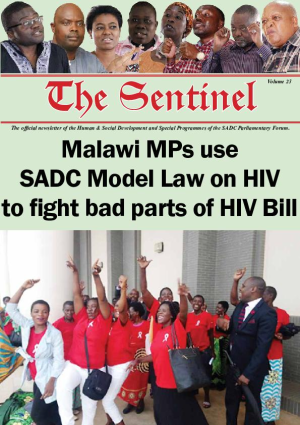
Malawi MPs use SADC Model Law on HIV to fight bad parts of HIV Bill
After nearly 10 years of intense debate and consultations, Malawi Members of Parliament voted to reject controversial provisions in their HIV (Prevention and Management) Bill. The Bill had included provisions that would have made HIV testing and treatment mandatory for specific people in a discriminating manner. Additionally, and perhaps more controversially, the Bill had sought, also, to allow criminalisation of HIV transmission, exposure and non-disclosure. This newsletter captures part of the debates leading to the passing of the final Bill.
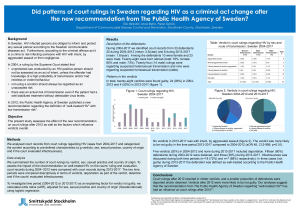
Did patterns of court rulings in Sweden regarding HIV as a criminal act change after the new recommendation from The Public Health Agency of Sweden?
The study assesses the effect of the new recommendations from the Public Health Agency of Sweden on court rulings after 2012 as well as the factors which influence verdicts overall.
Risks, Rights & Health – Supplement
This Supplement highlights developments since 2012 in science, technology, law, geopolitics, and funding that affect people living with or at risk from HIV and its coinfections. The recommendations add to and amplify those of the Commission’s 2012 report Risks, Rights & Health, which remain as relevant as they were six years ago.
The Global Criminalisation Scan Report
Provides global overview of the extent to which criminal and other laws have been used to prosecute people living with HIV for HIV transmission and exposure.
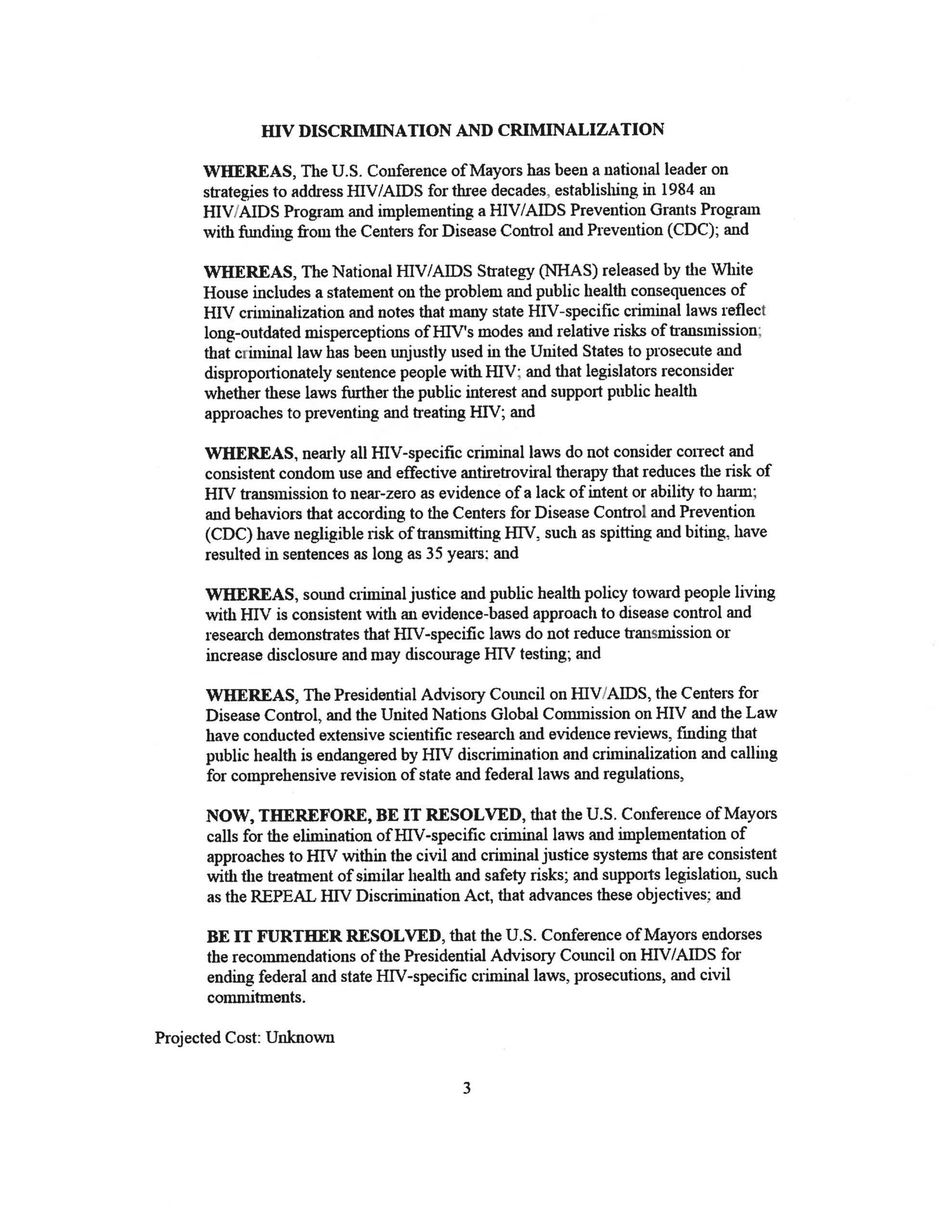
Resolution on HIV Discrimination and Criminalization
Calls for the elimination of HIV-specific criminal laws and implementation of approaches to HIV consistent with the treatment of similar health and safety risks. Endorses the recommendations of the Presidential Advisory Council on HIV/AIDS for ending federal and state HIV-specific criminal laws, prosecutions, and civil commitments.

Criminalization of HIV transmission Policy Brief
Urges governments to limit criminalisation of HIV to cases of intentional transmission. Argues that criminal law should not be applied in a range of circumstances, including where there is no significant risk of transmission.
- Alternative links
- French/Français, Spanish/Español, Russian/Русский