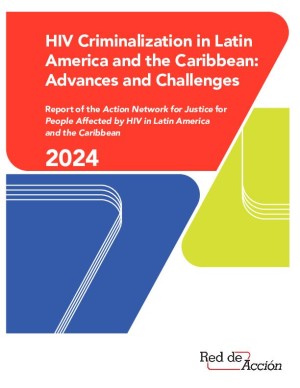
HIV Criminalization in Latin America and the Caribbean: Advances and Challenges
The 2024 report by the Action Network for Justice for People Affected by HIV/AIDS (Action Network) documents legal cases in the region where individuals are penalized for conduct linked to their HIV status, even in the absence of evidence of transmission or intent to cause harm. The report also notes instances involving serious offenses such as sexual violence or pedophilia, which the Action Network unequivocally condemns.

Resolution on Ending Federal and State HIV-Specific Criminal Laws, Prosecutions, and Civil Commitments
Calls for federal action to address criminalisation including review of laws and cases.
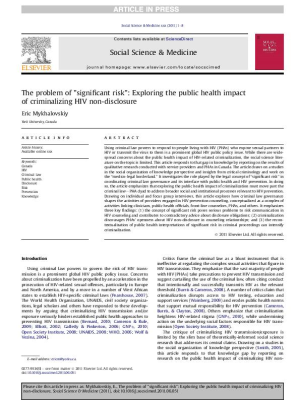
The problem of ‘significant risk’: Exploring the public health impact of criminalizing HIV non-disclosure
Emphasizes that the concept of significant risk undermines communication about transmission risk during HIV counselling and contributes to contradictory advice about disclosure obligations. Criminalization discourages openness about HIV non-disclosure in counselling relationships. The recontextualization of public health interpretations of significant risk in criminal proceedings can intensify criminalization.