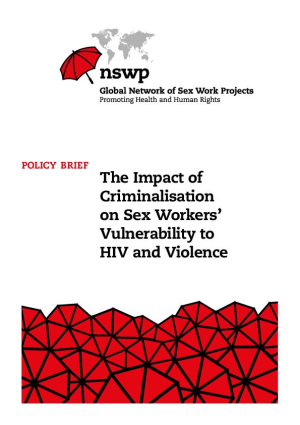
The Impact of Criminalisation on Sex Workers’ Vulnerability to HIV and Violence
This policy brief examines the impact of laws that criminalise sex work, informed by NSWP members’ submissions to an e-consultation. It examines the impact of criminalisation at three distinct phases: the surveillance and policing of sex workers prior to arrest; arrest and formal involvement of the criminal justice system; and release and return to the community. The paper covers various areas of law and law enforcement practices that disproportionately impact sex workers, including immigration laws, policing of public spaces, anti-LGBTQ laws, HIV criminalisation and religious codes.
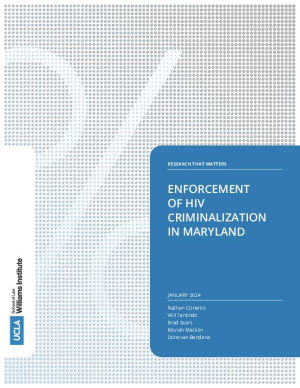
Enforcement of HIV Criminalization in Maryland
Using data obtained from the Maryland State Administrative Office of the Courts, this study from The Williams Institute examines the enforcement of HIV criminalization laws in Maryland.
Highlights:
- Nearly two-thirds of U.S. states and territories have laws that criminalize people living with HIV.
- Black people, especially Black men, are overrepresented in HIV-related crimes in Maryland.
- Over two-thirds of people charged with HIV-related crimes were charged in Baltimore City, Montgomery County, or Prince George's County.
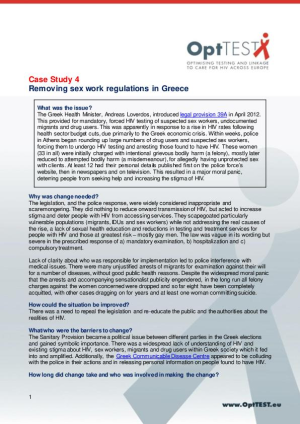
OptTEST case study 4: Removing sex work regulations in Greece
In April 2012, the Greek police carried out a massive operation in downtown Athens, arresting drug users and sex workers, forcing them to undergo HIV testing and charging them with prostitution. This case study explores the response from human rights and HIV groups both in Greece and internationally and the following campaign to repeal the provision.