
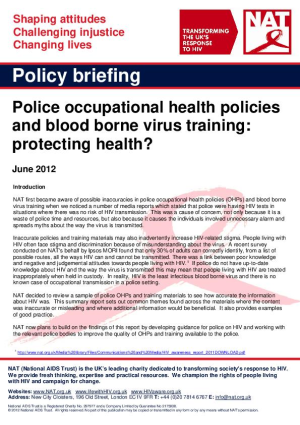
Police occupational health policies and blood borne virus training: protecting health?
Review of materials from 15 police constabularies found police practice was adversely influenced by numerous factual inaccuracies including routes of transmission, likelihood of infection, harms of infection, and need to segregate people in custody. Recommends review of police training materials and new training about HIV.
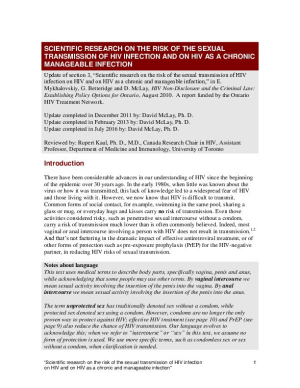
Scientific research on the risk of the sexual transmission of HIV infection and on HIV as a chronic manageable infection
Explains HIV transmission risk with reference to numerous studies, including a chart summarising per-act risk estimates for transmission of HIV during different types of sexual intercourse.
(update of original chapter in E. Mykhalovskiy, G. Betteridge and D. McLay, HIV Non-Disclosure and the Criminal Law: Establishing Policy Options for Ontario)

Criminal prosecutions for non-disclosure of HIV: engaging with governmental health authorities to advocate for the development of prosecutorial guidelines in Quebec
Describes creation of a working group facilitating dialogue between the justice and public health authorities on the issue of criminalization. The working group called on the Justice Ministry to develop prosecutorial policies and guidelines. Governmental health authorities proved to be key allies in opening a dialogue with the Justice Ministry. Suggests that health authorities should play a central role in the development of prosecutorial policies and guidelines.
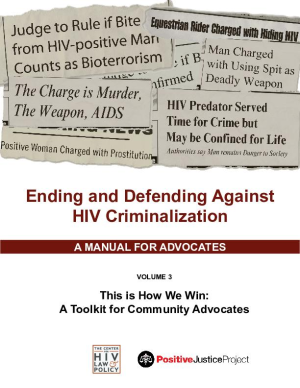
Ending and Defending Against HIV Criminalization: A manual for advocates. Vol 3: This is how we win. A Toolkit for community Advocates
Contains numerous criminalisation documents (also listed separately on this site), including Ten things anyone can do to help end HIV criminalization, How a Bill becomes a law, State-level legislative advocacy cheat sheet, How to talk about HIV criminalization with elected officials, media and others.