

Lessons learned from community engagement regarding phylodynamic research with molecular HIV surveillance data
The widespread implementation of molecular HIV surveillance (MHS) has resulted in an increased discussion about the ethical, human rights and public health implications of MHS. The researchers narrate the process of pausing their research in 2020 to conduct community engagement in response to these growing concerns and summarize the key lessons learned through conversations with community members.
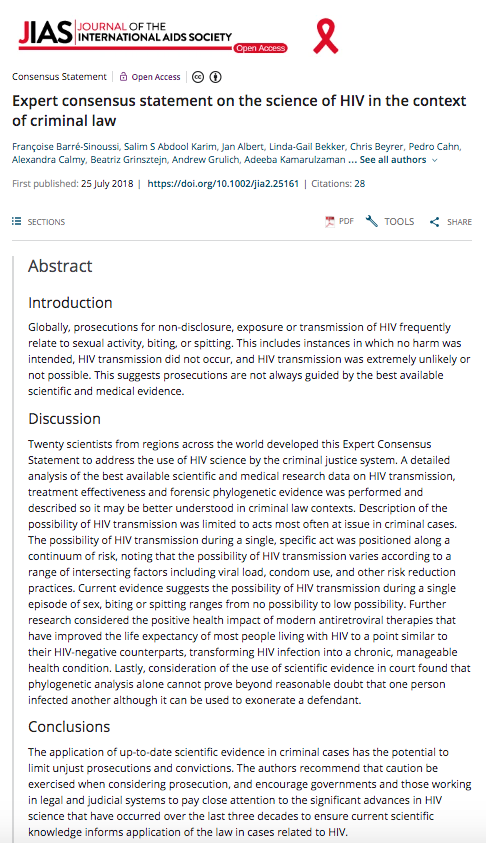
Expert consensus statement on the science of HIV in the context of criminal law
Twenty scientists from regions across the world developed this Expert Consensus Statement to address the use of HIV science by the criminal justice system. Description of the possibility of HIV transmission was limited to acts most often at issue in criminal cases. The authors recommend that caution be exercised when considering prosecution, and encourage governments and those working in legal and judicial systems to pay close attention to the significant advances in HIV science that have occurred over the last three decades to ensure current scientific knowledge informs application of the law in cases related to HIV.
- Alternative links
- Czech: Expertní prohlášení k vědeckým poznatkům o HIV v kontextu trestního práva , French: Déclaration de consensus d'experts sur la connaissance scientifique relative au VIH dans le contexte du droit pénal, German: Expertenkonsens zur HIV-Wissenschaft im Kontext des Strafrechts, Mandarin: 專家共識聲明:刑法脈絡下的愛滋相關科學, Russian: Заявление об экспертном консенсусе в отношении научных данных о ВИЧ- инфекции в контексте уголовного права , Spanish: Declaración de Consenso de expertos sobre la ciencia relativa al VIH en el contexto del derecho penal
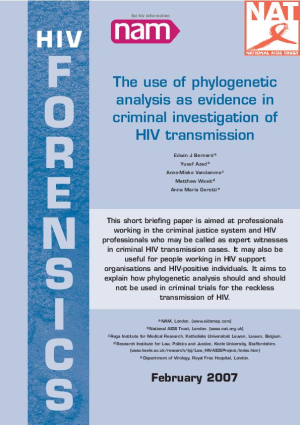
The use of phylogenetic analysis as evidence in criminal investigation of HIV transmission
Aimed at professionals working in the criminal justice system and those who may be called as expert witnesses in criminal trials, the briefing explains how phylogenetic analysis should and should not be used in criminal trials for the reckless transmission of HIV.
U.S. HIV Laws and Prosecutorial Tools, CHLP (updated 2022)
This chart from the Center for HIV Law and Policy, developed in 2013 and last updated in 2022, details each U.S. state’s HIV-specific laws in relation to various areas including spitting, biting, sharing needles, sex, and sex work, as well as HIV-specific sentence enhancement.