
Analysis of the National Legislation of Tajikistan Related to SOGI and HIV
This comparative study examines the legal and institutional obstacles that restrict the rights of LGBT people and people living with HIV. Building on a 2020 baseline, it analyses legislative developments and practical implementation between 2020 and 2025. The research uses an updated methodology combining questionnaires from local partners in Tajikistan, expert interviews, and case studies, alongside judicial data, government statistics, NGO and human rights reporting, activist testimonies, media analysis, and international human rights documentation. Particular focus is given to how laws and law enforcement affect freedom of association, access to justice, healthcare (including HIV services), freedom of expression, and protection from discrimination.
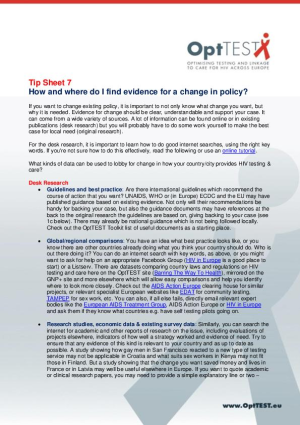
OptTEST Tip sheet 7 – How and where do I find evidence for a change in policy?
Explores how to change existing policy by presenting clear and understandable evidence to support advocacy.
HIV-specific legislation in sub-Saharan Africa: A comprehensive human rights analysis
Analyses key provisions in HIV-specific laws, outlining both protective and punitive provisions including criminalisation of HIV non-disclosure, exposure and transmission. Argues these provisions are generally overly broad, disregarding the best available recommendations for legislating on HIV; failing the human rights test of necessity, proportionality and reasonableness; consecrating myths and prejudice; and undermining HIV responses.