
Humanising the law: harnessing science and community voices to end HIV criminalisation
This paper traces the evolution of community-led responses to HIV criminalisation over nearly two decades, demonstrating how science, advocacy, and storytelling have collectively reshaped legal and policy frameworks.It describes the formation and strategic interventions of the HIV Justice Network and, later, the HIV JUSTICE WORLDWIDE coalition; highlights methodological innovations such as legal monitoring and community-based documentation; and emphasises the centrality of human rights principles. Case examples - including the legacy of Ugandan nurse Rosemary Namubiru - illustrate the impact of HIV criminalisation and the power of resilience. While challenges persist amidst growing authoritarianism and disinformation, coordinated global efforts continue to advance evidence-informed, rights-based alternatives. This paper calls for a humanisation of the law that centres lived experiences, elevates scientific understanding, and fosters justice for people living with HIV. Ultimately, this paper argues for a paradigm shift from punitive legal responses to approaches rooted in care, dignity, and justice.
Argumentaire technique contre la criminalisation de certaines populations clés
Ce document est une analyse technique sur des questions de criminalisation de certaines populations clés. Le but de ce travail est de démontrer sur le plan juridique les contradictions qu’une loi qui criminaliserait certains comportements de certaines populations clés pourraient présenter au vu des engagements internationaux, des traités internationaux dûment ratifiés, de la constitution et de la loi de 2008 portant protection des droits des PVVIH et PA de la RDC. Ce document s'adresse aux parlementaires et aux militants des droits humains.

Redefining Risk: Judicially Heightened Risk Standards and HIV-Specific Criminal Laws
This Note explains the risk of HIV transmission associated with certain behaviours, lays out variations in HIV-specific criminal laws, and examines how those laws are applied. It also examines the courts’ reasoning in Rhoades and Hogg as well as analyzes the legal and policy problems that these laws create, the challenges to amending or repealing the laws.
El enjuiciamiento de casos penales relacionados con el VIH en Canadá
El presente documento tiene por objeto ayudar a las autoridades fiscales a elaborar dichas orientaciones para evitar el uso perjudicial del derecho penal en relación con el VIH y garantizar el uso prudente de los escasos recursos de la fiscalía. Aunque otras infecciones de transmisión sexual pueden suscitar preocupaciones similares a las del VIH, han sido abrumadoramente los casos relacionados con el VIH los que han atraído el procesamiento y los comentarios judiciales. Por ello, el presente documento se centra en los juicios relacionados con el VIH.
Este documento fue traducido de su idioma original usando DeepL Pro (una aplicación web basada en inteligencia artificial) a fin de facilitar la lectura del contenido para los usuarios de la HIV Justice Academy. Reconocemos las limitaciones de las traducciones realizadas a través de este tipo de tecnología y no podemos garantizar la precisión de la versión traducida.
The Threat Lives On: How to Exclude Expectant Mothers from Prosecution for Mere Exposure of HIV to their Fetuses and Infants (2015)
This article articulates how the threat of prosecution of mothers living with HIV who expose or transfer the virus to their foetuses or newborn will discourage and scare women away from seeking proper medical treatment instead of encouraging HIV treatment and prevention. It also explores how HIV-specific criminal transmission laws in the United States could hamper and stifle the progress in prevention and treatment of vertical transmission. It concludes by proposing a model for change in addressing these HIV-specific criminal transmission statutes.
- Alternative links
- Traduction française automatisée

Tunisie : Loi no 92-71 du 27 juillet 1992
Loi relative aux maladies transmissibles dont les articles 11 et 18 pénalisent les personnes qui concourent délibérément par leur comportement à la transmission de la maladie dont elles sont atteintes à d’autres personnes.
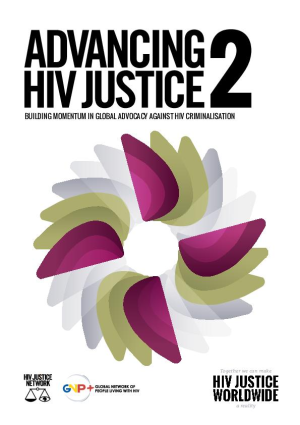
Advancing HIV Justice 2: Building momentum in global advocacy against HIV criminalisation
Provides a progress report of achievements and challenges in global advocacy against HIV criminalisation from April 2013 to 30 September 2015.
- Alternative links
- Français (Traduction automatisée),
Who? What? Where? When? And with what consequences?: An analysis of criminal cases of HIV non-disclosure in Canada
Explores the evolution of the criminalization of HIV non-disclosure in Canada, focusing on “criminalization creep”: increasing numbers of people being charged with increasingly severe crimes.

Policy Position Statement on HIV Criminalization
Opposes laws that distinguish HIV from other comparable diseases or that create disproportionate penalties for disclosure, exposure or transmission of HIV disease beyond normal public health ordinances. Supports non-punitive prevention approaches to HIV centred on current scientific understanding and evidence based research.
HIV Criminalization Laws and Policies Promote Discrimination and Must Be Reformed
States HIV criminalization laws and policies promote discrimination and hinder HIV prevention, care and treatment. Calls for law reform and education.

Special issue on the ramifications of the current context of criminal prosecutions for non-disclosure of HIV status on nursing practice
Summarizes a full-day meeting of health providers to address nondisclosure prosecutions and nursing practice. Issues included criminal law and serostatus disclosure, public health legislation surrounding HIV care and management, civil liabilities related to HIV-related care, and professional regulations and standards that influence nursing practice. Report includes recommendations.

Position statement on the use of antiretroviral therapy to reduce HIV transmission
Summarises extensive discussion about various aspects of current scientific data to explain HIV transmission risk.