
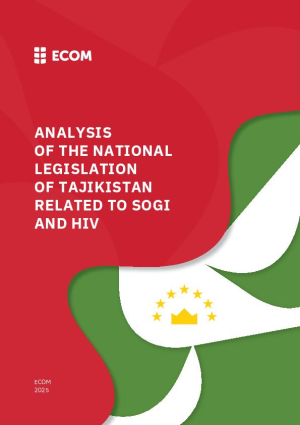
Analysis of the National Legislation of Tajikistan Related to SOGI and HIV
This comparative study examines the legal and institutional obstacles that restrict the rights of LGBT people and people living with HIV. Building on a 2020 baseline, it analyses legislative developments and practical implementation between 2020 and 2025. The research uses an updated methodology combining questionnaires from local partners in Tajikistan, expert interviews, and case studies, alongside judicial data, government statistics, NGO and human rights reporting, activist testimonies, media analysis, and international human rights documentation. Particular focus is given to how laws and law enforcement affect freedom of association, access to justice, healthcare (including HIV services), freedom of expression, and protection from discrimination.
It’s time to end HIV criminalization
While some individual public health officials have sup- ported efforts to reform HIV criminalization, the contribution of the organized public health profession, as a whole, has been marginal. Public health authorities have been indifferent to such efforts, have been afraid to voice their support, or have actively stood in the way of needed changes.This editorial argues that it is not too late for the public health community to make a difference. There is much work and ongoing advocacy needed for the tide to fully turn on HIV criminalization in this country. A strong public health voice urging the federal government to deliver on its promise to enact principled, evidence-based Criminal Code reforms that end unjust HIV criminalization would make an important contribution.
A Comparative Look at HIV Laws in the Deep South: Mississippi vs. Tennessee, Alabama, and Louisiana
The Deep South has long been grappling with the HIV epidemic. While significant strides have been made in HIV prevention and treatment nationwide, the legal landscape regarding HIV varies considerably from state to state. In this blog post, we will compare Mississippi’s HIV laws with those of other Deep South states, namely Tennessee, Alabama, and Louisiana. Understanding how these states approach HIV-related legislation can shed light on the progress made and areas that still need attention in Mississippi.

HIV Is not a Crime – Modernize Nevada’s HIV Criminal Laws
Talking points to help activists advocating against Nevada's HIV Criminal Laws.
Ten Things Anyone Can Do To Help End HIV Criminalization
This short guide from The Center for HIV Law and Policy published in 2013 provides suggested actions to further advocacy against HIV criminalisation, with associated resources.