
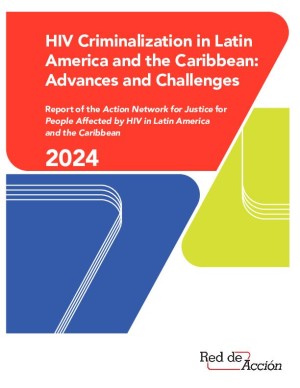
HIV Criminalization in Latin America and the Caribbean: Advances and Challenges
The 2024 report by the Action Network for Justice for People Affected by HIV/AIDS (Action Network) documents legal cases in the region where individuals are penalized for conduct linked to their HIV status, even in the absence of evidence of transmission or intent to cause harm. The report also notes instances involving serious offenses such as sexual violence or pedophilia, which the Action Network unequivocally condemns.
Decriminalizing Disease: A Health Justice Approach to Infectious Diseases and Criminal Law
This Article seeks to re-frame the discussion around the legal framework for infectious diseases in a way that moves beyond a punishment mindset and toward a health justice mindset. The focus in this Article is on health justice rather than traditional understandings of public health, defined as the science and practice of improving the health of people and their communities.
It argues that health justice, when applied to infectious diseases, requires decriminalisation. Health justice aligns with the abolitionist project to dismantle carceral practices and implement non-carceral approaches
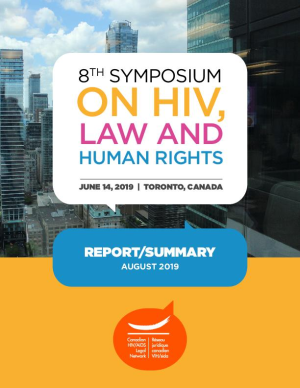
8th Symposium on HIV, Law and Human Rights
The report of the HIV Legal Network's 8th HIV, Law and Human Rights Symposium held in 2019 summarizes the discussions of the Forum where survivors of HIV criminalization shared their experiences and where experts in the field presented updates on the current state of HIV criminalization in Canada, the latest scientific developments surrounding HIV transmission and the future of advocacy efforts in the country.

HIV forensics: pitfalls and acceptable standards in the use of phylogenetic analysis as evidence in criminal investigations of HIV transmission
Considers the usefulness of phylogenetic analysis in HIV criminal trials, finding that phylogenetic analysis cannot prove that HIV transmission occurred directly between two individuals. Explains that phylogenetic analysis can exonerate individuals by demonstrating that the defendant carried a virus strain unrelated to that of the complainant.
- Alternative links
- Français, Español, Русский, HIV Medicine Wiley Online Library

Resolution on Ending Federal and State HIV-Specific Criminal Laws, Prosecutions, and Civil Commitments
Calls for federal action to address criminalisation including review of laws and cases.
The problem of ‘significant risk’: Exploring the public health impact of criminalizing HIV non-disclosure
Emphasizes that the concept of significant risk undermines communication about transmission risk during HIV counselling and contributes to contradictory advice about disclosure obligations. Criminalization discourages openness about HIV non-disclosure in counselling relationships. The recontextualization of public health interpretations of significant risk in criminal proceedings can intensify criminalization.