
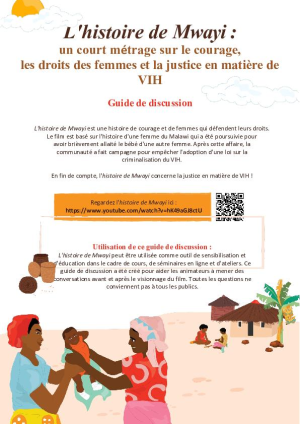
Guide de discussion – L’histoire de Mwayi : un court métrage sur le courage, les droits des femmes et la justice en matière de VIH
Guide de discussion pour aider les animateurs à animer des conversations avant et après le visionnage du film L'histoire de Mwayi. Le film raconte l'histoire d'une femme au Malawi qui a été poursuivie pour avoir brièvement allaité le bébé d'une autre et du plaidoyer qui a suivi pour empêcher l'adoption d'une loi sur la pénalisation du VIH. Le guide présente le contexte et pose ensuite un certain nombre de questions visant à stimuler la réflexion et les discussions.
Ce document est une traduction automatique via Deepl.com
OptTEST Hoja de consejos 12 – Qué podemos hacer cuando los políticos ignoran las pruebas?
Ejemplos de estrategias para oponerse o refutar decisiones de política inadecuadas.
OptTEST Hoja de consejos 11 – Preguntas clave: Preguntas que debe hacerse (y ser capaz de responder) antes de solicitar una reunión con un ministro del Gobierno
Consejos y preguntas para guiar la preparación de reuniones con funcionarios de gobierno.
Este documento fue traducido de su idioma original usando DeepL Pro (una aplicación web basada en inteligencia artificial) a fin de facilitar la lectura del contenido para los usuarios de la HIV Justice Academy. Reconocemos las limitaciones de las traducciones realizadas a través de este tipo de tecnología y no podemos garantizar la precisión de la versión traducida.
Fiche-conseils OptTEST 9 – Comment présenter notre cas aux décideurs et aux politiciens ?
Explore comment éduquer les décideurs et les politiciens, les meilleures façons de communiquer, comment formuler les arguments, etc.
Ce document a été traduit de sa langue d'origine à l'aide de DeepL Pro (une technologie de traduction en ligne basée sur l’intelligence artificielle) pour offrir aux utilisateurs de HIV Justice Academy une plus grande sélection de ressources. Nous sommes conscients des limites de la traduction automatique et ne garantissons donc pas l'exactitude de la traduction.
OptTEST Hoja de consejos 9 – ¿Cómo debemos presentar nuestro caso a los responsables de la toma de decisiones y a los políticos?
Explora cómo educar a los responsables de la toma de decisiones y a los políticos, las mejores formas de comunicar, cómo enmarcar los argumentos, etc.
Este documento fue traducido de su idioma original usando DeepL Pro (una aplicación web basada en inteligencia artificial) a fin de facilitar la lectura del contenido para los usuarios de la HIV Justice Academy. Reconocemos las limitaciones de las traducciones realizadas a través de este tipo de tecnología y no podemos garantizar la precisión de la versión traducida.
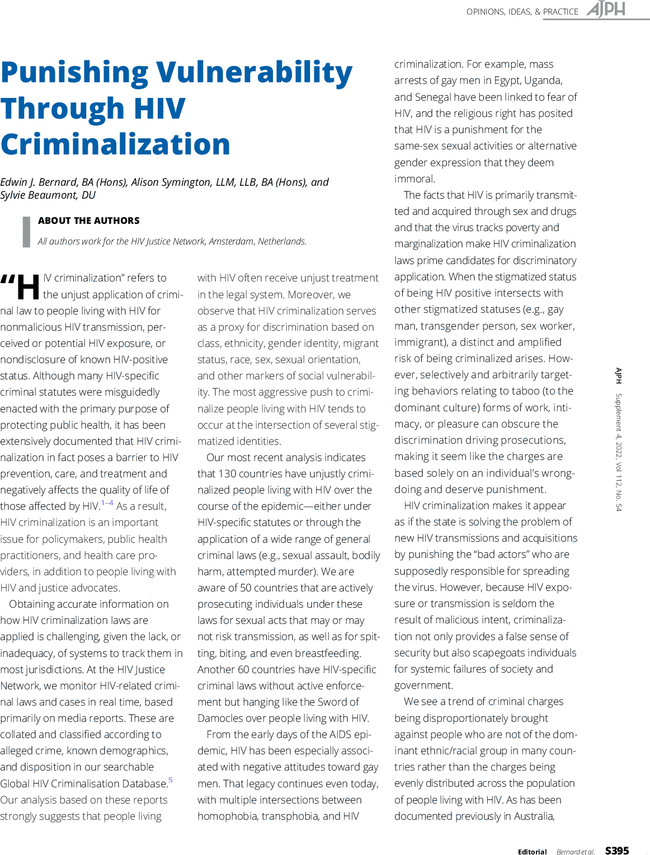
Penalizar la vulnerabilidad mediante la criminalización del VIH
Este artículo explora los vínculos entre la criminalización del VIH y otras leyes y políticas punitivas que rigen la autonomía corporal, incluyendo la reproducción, la sexualidad y el género.
Manuel judiciaire sur le VIH, les droits de l’homme et le droit en Ouganda
Le manuel judiciaire sur le VIH, les droits de l'homme et le droit en Ouganda comprend cinq parties qui abordent les questions relatives au VIH/SIDA et soulèvent des problèmes pertinents liés à son existence qui peuvent affecter les décisions des juges ainsi que des recommandations possibles pour commencer. Plus précisément, il présente un contexte dans lequel l'état actuel de l'épidémie de VIH/SIDA et la réponse à celle-ci sont inclus.
- La partie I énonce le droit international et les cadres des droits de l'homme applicables au VIH/SIDA en Ouganda.
- La partie II se concentre sur le droit national et les cadres des droits de l'homme applicables au VIH en Ouganda.
- La partie III traite des lacunes/problèmes/manques dans le droit national et les cadres des droits de l'homme applicables au VIH et discute des politiques relatives au VIH.
- La partie IV porte sur la criminalisation de la transmission du VIH et ses effets néfastes.
- La partie V porte sur les choses à ne pas oublier lors du jugement et de l'arbitrage des affaires de VIH, sur ce que devrait être la disposition d'un officier de justice ainsi que sur le rôle d'un officier de justice dans la salle d'audience lors du traitement de telles affaires.
Ce document a été traduit de sa langue d'origine à l'aide de DeepL Pro (une technologie de traduction en ligne basée sur l’intelligence artificielle) pour offrir aux utilisateurs de HIV Justice Academy une plus grande sélection de ressources. Nous sommes conscients des limites de la traduction automatique et ne garantissons donc pas l'exactitude de la traduction.
Les femmes vivant avec le VIH dans les pays à revenu élevé et l’allaitement (2020)
Un examen approfondi des orientations politiques, de la science et de la pratique dans les milieux à revenu élevé du Danemark. Il conclut que "le traitement antirétroviral maternel suppressif réduit considérablement, mais n'élimine pas, le risque de transmission postnatale du VIH par l'allaitement. Cependant, il est important de reconnaître et d'admettre que certaines femmes vivant avec le VIH peuvent souhaiter allaiter leur enfant. Dans ce cas, les prestataires de soins de santé et les femmes ont besoin d'informations fondées sur des preuves concernant les risques et les avantages pour pouvoir prendre une décision éclairée."
Ce document a été traduit de sa langue d'origine à l'aide de DeepL Pro (une technologie de traduction en ligne basée sur l’intelligence artificielle) pour offrir aux utilisateurs de HIV Justice Academy une plus grande sélection de ressources. Nous sommes conscients des limites de la traduction automatique et ne garantissons donc pas l'exactitude de la traduction.
Rôle des médias pour mettre fin à la criminalisation du VIH – Boîte à outils médias 2021-2023
L'objectif de cette boîte à outils pour les médias est d'aider les journalistes et les défenseurs de la santé à comprendre la criminalisation du VIH au Zimbabwe et à s'engager de manière adéquate dans les différentes facettes des arguments et des points de vue sur le sujet. Les journalistes et les défenseurs sont des acteurs clés de la promotion des objectifs de santé publique et de l'avancement des droits et libertés des personnes infectées et affectées par le VIH.
Ce document a été traduit de sa langue d'origine à l'aide de DeepL Pro (une technologie de traduction en ligne basée sur l’intelligence artificielle) pour offrir aux utilisateurs de HIV Justice Academy une plus grande sélection de ressources. Nous sommes conscients des limites de la traduction automatique et ne garantissons donc pas l'exactitude de la traduction.
Evaluation d’impact de l’application de la législation pénalisant la transmission, l’exposition et la non-divulgation du VIH sur la riposte nationale au VIH
En janvier 2021, la Coalition Nationale pour la Dépénalisation du VIH au Niger (créé en juin 2018), en collaboration avec le ministère de la santé et le ministère de la justice, a conduit une étude pour évaluer l’impact de l’application des dispositions pénalisant la transmission, l’exposition et la non divulgation du VIH sur la riposte nationale au VIH.
GUIDE PRATIQUE POUR LES PARAJURISTES : Soutenir les personnes vivant avec le VIH affectées par la criminalisation du VIH dans la région EECA
L'objectif de ce guide est de sensibiliser au droit les militants de la communauté des personnes vivant avec le VIH qui fournissent une assistance parajuridique aux personnes affectées par la criminalisation du VIH. L'utilisation de ce guide est également recommandée aux activistes des populations clés - personnes qui consomment des drogues, travailleurs du sexe, et représentants de la communauté LGBT. Ce manuel reflète l'expérience des membres de la communauté des personnes séropositives, ainsi que de leurs partenaires et associés de toute l'Europe de l'Est et de l'Asie centrale (EECA), en matière d'assistance directe aux personnes séropositives affectées par les lois discriminatoires spécifiques au VIH et la décriminalisation du VIH.
Ce document a été traduit de sa langue d'origine à l'aide de DeepL Pro (une technologie de traduction en ligne basée sur l’intelligence artificielle) pour offrir aux utilisateurs de HIV Justice Academy une plus grande sélection de ressources. Nous sommes conscients des limites de la traduction automatique et ne garantissons donc pas l'exactitude de la traduction.
La penalización del VIH — Serie de folletos informativos sobre derechos humanos
ONUSIDA ha creado una serie de folletos informativos sobre derechos humanos en diversas áreas, destacando la necesidad crítica de ampliar la acción en materia de derechos humanos para contribuir en la aplicación de las intervenciones para eliminar las barreras sociales. Se trata de una serie de documentos breves, fáciles de comprender y accesibles, en los que se detallan los últimos detalles epidemiológicos, las pruebas del impacto de las intervenciones en materia de derechos humanos, los objetivos más recientes y las directrices, recomendaciones y obligaciones internacionales relacionados con derechos humanos respecto a cada tema.
Folletos publicados en junio de 2021: La penalización del VIH, El VIH y las personas que consumen drogas, El VIH, y los hombres homosexuales y los hombres que mantienen relaciones sexuales con hombres, El VIH, y las personas transgénero y las personas de género diverso, El VIH y el trabajo sexual, El VIH y las personas recluidas en centros penitenciarios y otros lugares de reclusión, El VIH, y el estigma y la discriminación.
Reportajes en los medios de comunicación: El VIH y el derecho penal
Esta guía ofrece información con base en pruebas y datos y busca ayudar a los periodistas de Canadá a informar de forma responsable y precisa sobre la presunta no revelación del VIH y los casos penales resultantes.
Este documento fue traducido de su idioma original usando DeepL Pro (una aplicación web basada en inteligencia artificial) a fin de facilitar la lectura del contenido para los usuarios de la HIV Justice Academy. Reconocemos las limitaciones de las traducciones realizadas a través de este tipo de tecnología y no podemos garantizar la precisión de la versión traducida.
Déclaration: Pourquoi poursuit-on encore des personnes vivant avec le VIH qui utilisent des condoms
Déclaration publiée conjointement par le Réseau juridique VIH, la Coalition des organismes communautaires québécois de lutte contre le sida (COCQ-SIDA) et la HIV & AIDS Legal Clinic Ontario (HALCO) qui sont intervenus dans une affaire devant la cour d'appel de l'Ontario, pour dénoncer la criminalisation des personnes vivant avec le VIH qui portent un préservatif.
La criminalización de la transmisión de VIH en los medios: periodismo de sucesos entre el sensacionalismo y la homofobia
Este trabajo analiza la cobertura periodística en torno a dos hombres europeos juzgados en 2017: el escocés Daryll Rowe, condenado a cadena perpetua por tratar de infectar con VIH a 10 hombres, y el italiano Valentino Talluto, sentenciado por transmitir el virus a 32 mujeres. El estudio busca identificar las características dominantes en ambas coberturas y las diferencias fruto de la distinta orientación sexual de sus protagonistas. Conclusión: La cobertura del VIH como información de sucesos implica un encuadre emocional que puede afectar negativamente a cómo los lectores se relacionan con las personas que viven con el virus, además de revelar la pervivencia de cierta homofobia mediática.
El uso continuado del preservativo en el sexo anal prevendría el 70% de las infecciones por VIH
Este estudio realizado por un equipo de investigación de los Centros para el Control y Prevención de Enfermedades de EE UU (CDC, en sus siglas en inglés) estima la eficacia del preservativo como estrategia de prevención de la transmisión del VIH entre hombres gais.
Advancing HIV Justice 3/Promover la justicia del VIH 3 – El crecimiento del movimiento global en contra de la criminalización del VIH
Promover la justicia del VIH 3 es un reporte sobre el estatus de los logros y desafíos con respecto a la incidencia global en contra de la criminalización del VIH llevada a cabo entre el 1 de octubre de 2015 y el 31 de diciembre de 2018.
De la protection de la Nation à la protection des femmes : genèse de la criminalisation du VIH en France
Résumé: "Cet article porte sur la genèse de la criminalisation de la transmission sexuelle du VIH en France, des débats parlementaires sur l’éventuelle mise en place d’un délit de dissémination des maladies transmissibles épidémiques en 1991 à l’essor des procès pour transmission du VIH au milieu des années 2000. À partir d’une analyse d’archives parlementaires, juridiques et associatives, il s’agit de retracer les modifications dans la justification politique de la criminalisation du VIH."
Comité pour l’élimination de la discrimination à l’égard des femmes: Observations finales concernant les huitième et neuvième rapports périodiques (présentés en un seul document) du Canada*
Observations finales de CEDAW sur le Canada recommandant de limiter l’application des dispositions du droit pénal aux cas de transmission intentionnelle du VIH, comme le préconisent les normes internationales de santé publique.
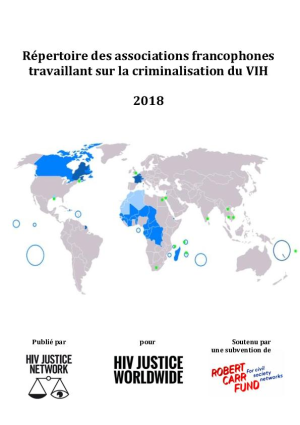
Répertoire des associations francophones travaillant sur la criminalisation du VIH – 2018
Répertoire des associations francophones qui travaillent déjà dans le domaine de la criminalisation du VIH ou qui seraient intéressées à developper leur engagement dans ce domaine.

Indétectabilité et transmission du VIH au sein de couples sérodiscordants
Etude de cohorte (Opposites Attract observational cohort study) portant sur 358 couples homosexuels sérodiscordants recrutés entre 2012-2016. Résultats montrent que le traitement antirétroviral est efficace en termes de prévention chez les HSH.
Evaluation du cadre juridique de protection des droits en matière de VIH (LEA) en Côte d’Ivoire
L’évaluation du cadre juridique de protection des droits en matière de VIH (LEA), se présente comme une activité de suivi des recommandations et conclusions de la Commission mondiale sur le VIH et les Droits de l’Homme en Côte d’Ivoire. L’objectif général est de promouvoir un environnement juridique qui favorise une réponse efficace fondée sur le droit dans la riposte contre le VIH en République de Côte d’Ivoire.
La Criminalisation du VIH au Canada : Contexte actuel et plaidoyer
Décrit le paysage juridique au moment de la rédaction du document concernant la criminalisation de la non-divulgation du VIH au Canada et ce que le Réseau juridique et ses partenaires font afin de contrer le recours excessif au droit criminel à l’encontre des personnes vivant avec le VIH.
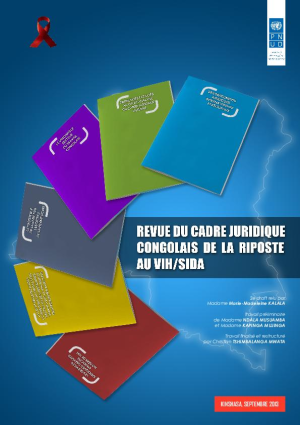
Revue du cadre juridique congolais de la riposte au VIH/sida
Ce document est une analyse du cadre legal congolais se portant sur des questions de criminalisation des populations clefs et comprenant une section sur la criminalisation de la transmission du VIH en RDC (page 61). Le rapport comprend des consultations et des entrevues avec des experts congolais en matière du droit et VIH, ainsi que des groupes de discussion avec des PVVIH, des organisations de la société civile qui travaillent directement avec des populations clés. C’est à la lumière de l’analyse de toutes ces informations que les recommandations sont formulées. Depuis la publication de ce rapport les dispositions législativees pénalisant la transmission et/ou l’exposition au VIH par voie sexuelle ont été modifiées (Voir la section "Textes de lois").
Mémoire des intervenants à la Cour Supreme du Canada: R v. Mabior et R v. D.C.
Demande si l'infraction d'agression sexuelle grave peut et devrait être établie pour non-divulgation du VIH dans des circonstances où, selon les intervenants, il n'y a pas de «risque important» de transmission en raison de facteurs qui réduisent considérablement ce risque, comme l'utilisation de préservatifs ou une charge virale indétectable ou faible
Des magistrats éminents s’unissent pour aborder les questions du VIH, des droits de l’homme et du droit
Décrit une réunion d'une trentaine de juges des plus hautes juridictions nationales de 16 pays d'Asie et du Pacifique pour discuter du rôle du pouvoir judiciaire dans la riposte au VIH. Les juges ont également débattu des mesures spécifiques qui peuvent être prises pour créer un environnement juridique et social plus favorable pour les personnes vivant avec le VIH et les personnes vulnérables au VIH dans la région.