
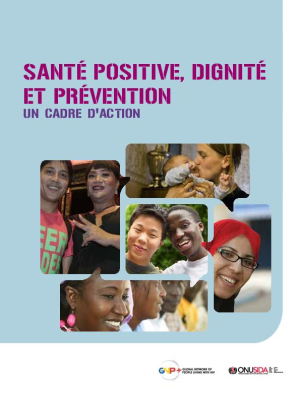
Santé positive, Dignité et Prévention : Un cadre d’action
La Santé positive, Dignité et Prévention met en lumière l'importance du positionnement de la personne vivant avec le VIH au centre de la prise en charge de sa santé et de son bien-être. Le Cadre de Santé positive, Dignité et Prévention nécessite des efforts multisectoriels conjugués pour la suppression des lois punitives et l’adoption de lois plus nombreuses qui appuient et permettent des politiques en faveur de l’extension de programmes avérés réduire les nouvelles infections à VIH tout en protégeant les droits humains des personnes vivant avec le VIH et de celles qui présentent un risque élevé d’exposition au virus.
Vigilancia molecular del VIH: revisión global de sus implicaciones en materia de derechos humanos
Vigilancia molecular del VIH: revisión global de sus implicaciones en materia de derechos humanos brinda una explicación detallada de lo qué es esta tecnología y cómo está siendo utilizada en diferentes rincones del mundo, incluyendo aspectos sobre el funcionamiento de la misma, dónde se está aplicando y por quién o quiénes. El documento muestra el incremento de las preocupaciones en materia de derechos humanos relacionadas con el uso de esta tecnología y enumera una lista de recomendaciones para la utilización de la misma, producto de la revisión de literatura científica internacional y la opinion del Grupo de Consejeros Especialistas.
Eliminar la transmisión del VIH a través de la leche materna de mujeres con tratamiento antirretroviral (2021)
Ameena Goga y sus colegas sostienen que es necesario realizar pruebas frecuentes de la carga viral materna para eliminar la transmisión del VIH a través de la leche materna en entornos de ingresos bajos y medios.
Este documento fue traducido de su idioma original usando DeepL Pro (una aplicación web basada en inteligencia artificial) a fin de facilitar la lectura del contenido para los usuarios de la HIV Justice Academy. Reconocemos las limitaciones de las traducciones realizadas a través de este tipo de tecnología y no podemos garantizar la precisión de la versión traducida.

Le risque négligeable : Les résultats les plus récents de deux études continuent de montrer que le traitement antirétroviral et une charge virale indétectable constituent une stratégie de prévention du VIH hautement efficace
Les analyses provisoires de deux études importantes, soit HPTN 052 en 2011 et PARTNER en 2014, démontrent que la thérapie antirétrovirale efficace et une charge virale indétectable constituaient une stratégie de prévention du VIH hautement efficace pour les couples hétérosexuels et les couples d’hommes gais sérodifférents
Consensus d’experts : charge virale et risque de transmission du VIH
Un sous-comité d’experts a réalisé une revue de littérature portant sur le risque de transmission du VIH en présence d’une charge virale indétectable lors d’activités sexuelles vaginales, orales et anales. Déclare qu'un traitement antirétroviral (ARV) efficace qui abaisse la charge virale à un niveau indétectable réduit aussi de manière significative le risque de transmission du VIH.
Répondre aux médias: Que faire si vous recevez une requête médiatique non sollicitée
Recommandations générales pour répondre aux demandes de médias sur les nouvelles affaires de criminalisation de la non-divulgation.
Faire face à la criminalisation de l’exposition au VIH ou de sa transmission : Ressources pour avocats et militants
En réponse au recours croissant au droit pénal à l’échelle internationale et devant le besoin criant des avocats représentant des personnes vivant avec le VIH/sida d’être suffisamment outillés pour traiter ce type d’affaire, cette trousse contient de la documentation à teneur informative pour aider les avocats dans la préparation de leurs dossiers; elle renferme aussi une sélection de publications qui pourraient être présentées en cour.
Préparé par : Réseau juridique VIH, AIDES, Groupe sida Genève, Réseau mondial des personnes vivant avec le VIH (GNP+)
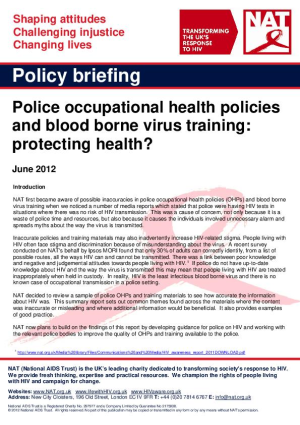
Police occupational health policies and blood borne virus training: protecting health?
Review of materials from 15 police constabularies found police practice was adversely influenced by numerous factual inaccuracies including routes of transmission, likelihood of infection, harms of infection, and need to segregate people in custody. Recommends review of police training materials and new training about HIV.