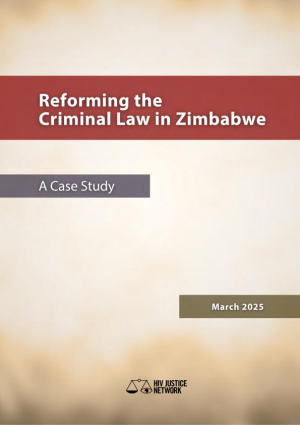
Reforming the criminal law in Zimbabwe: A case study
The report, Reforming the Criminal Law in Zimbabwe: A Case Study, explores how advocates, legal experts, and community leaders worked together to repeal Section 79 of Zimbabwe’s Criminal Code, which criminalised HIV non-disclosure, exposure, or transmission. It outlines key strategies used in the campaign and lessons for other countries seeking to end HIV criminalisation.
Unfair criminalization as a threat to epidemic safety
This article aims to raise awareness and stimulate serious discussion of the negative impact of criminal law regulation on the prevention and treatment of infectious diseases, including HIV/AIDS, tuberculosis, and sexually transmitted diseases.
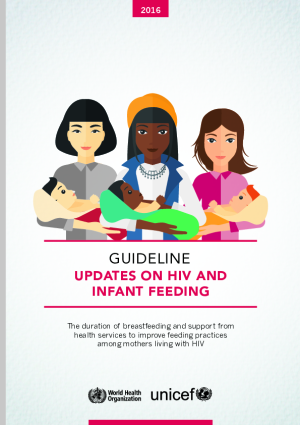
WHO Guideline: Updates on HIV and Infant Feeding (2016)
The overall purpose of this guideline is to improve the HIV-free survival of HIV-exposed infants by providing guidance on appropriate infant feeding practices and use of ARV drugs for mothers living with HIV in countries with high HIV prevalence and settings in which diarrhoea, pneumonia and undernutrition are common causes of infant and child mortality.
The guideline addresses four aspects of infant feeding in the context of HIV:
-
the duration of breastfeeding by mothers living with HIV;
-
interventions to support infant feeding practices by mothers living with HIV;
-
what to advise when mothers living with HIV do not exclusively breastfeed; and
-
what to advise when mothers living with HIV do not plan to breastfeed for 12 months.
The guideline informs national policy-makers on what may be relevant for national policies and programmes, it provides guidance to health-care providers, researchers and clinicians involved in managing pregnant women and mothers living with HIV at various levels of health care.
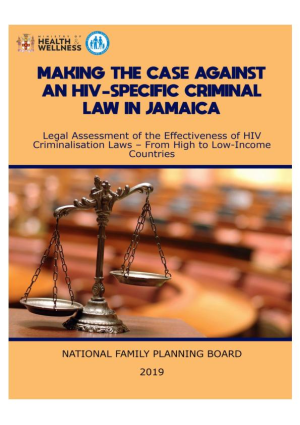
Making the case against an HIV-specific law in Jamaica
This assessment ‘Legal Assessment of the Effectiveness of HIV Criminalisation Laws-from High to Low-Income Countries’ demonstrates why the enactment of an HIV-specific criminal law in Jamaica would be harmful to the national HIV response. It sets out the bases on which the recommendation for an HIV-specific criminal law should be rejected and highlights the need for public health policy considerations to centre the discussions surrounding HIV criminalisation in Jamaica.
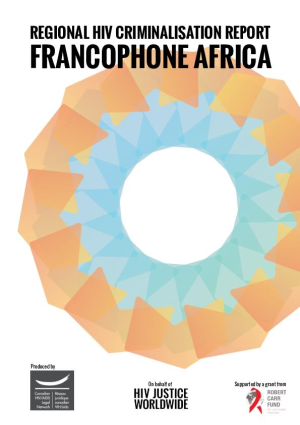
Regional HIV Criminalisation Report: Francophone Africa
The 3 first pages of this report are an Executive Summary in English of the findings from a HIV criminalisation mapping exercise in Francophone Africa, conducted between May and September 2017. The full report in French starts from page 4.
Factum of the Interveners at the Supreme Court of Canada: R v. Mabior and R v. D.C.
Questions whether the offence of aggravated sexual assault can and should be established for HIV non-disclosure in circumstances where, in the Interveners’ submission, there is no “significant risk” of transmission because of factors that dramatically reduce that risk, such as the use of condoms or an undetectable or low viral load
Advancing HIV Justice: A progress report of achievements and challenges in global advocacy against HIV criminalisation
Provides a progress report of achievements and challenges in global advocacy against HIV criminalisation during the 18 month period, September 2011 to March 2013.
Legal and clinical implications of HIV non-disclosure: A practical guide for HIV nurses in Canada
Provides guidance on the complexities many nurses face working with people living with HIV including how to document advice on disclosure and responding to a search warrant.