
Enforcement of HIV Criminalization in Michigan
Using data obtained from the Criminal History Record database maintained by the Michigan State Police Criminal Justice Information Center, this study examines the enforcement of HIV nondisclosure laws from 1991 to 2024.
When law and science part ways: the criminalization of breastfeeding by women living with HIV
In this study, the authors place the criminalisation of women with HIV for breastfeeding within the context of current medical recommendations and cultural views of breastfeeding. They review the criminal cases against women living with HIV for breastfeeding around the globe, examine the injustice of these prosecutions, and provide recommendations for decriminalisation.
Disability Law and HIV Criminalization
Over thirty states maintain criminal laws that expressly target people living with HIV. Thousands of people are prosecuted under these statutes, exposing them to decades of incarceration, thousands of dollars in fines, and state-sanctioned stigma. This broad pattern of discrimination based solely on HIV status is not supported by scientific evidence nor public-health rationales. This Note argues that many states’ HIV-specific criminal laws violate the Americans with Disabilities Act’s ban on discrimination by public entities.
Male circumcision for the prevention of heterosexually acquired HIV infection: a meta-analysis of randomized trials involving 11 050 men
Systemic review of medical literature found male circumcision is an effective strategy for reducing new male HIV infections, however, its impact at population level requires consistently safe sexual practices to maintain the protective benefit.
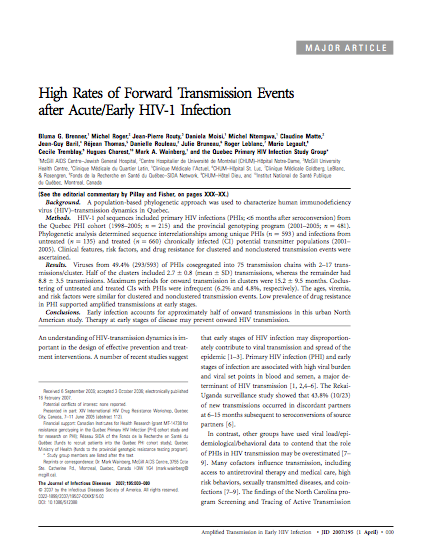
High rates of forward transmission events after acute/early HIV-1 infection
Uses a population-based phylogenetic approach to characterize HIV transmission dynamics in Quebec. Found early infection accounts for approximately half of onward transmissions. Suggests therapy at early stages of disease may prevent onward HIV transmission.
HIV Criminalization: A Physician’s Perspective
US physician, Dr Wendy Armstrong’s, first person account of the prosecution of one of her patients is a rare published work about HIV criminalization by a practicing HIV medical practitioner. The article walks the reader through Dr Armstrong’s experience as she is forced to testify against a patient in HIV criminalization proceedings.