Enforcement of HIV Criminalization in Ohio
This study examines the history of HIV criminalization in Ohio and analyzes key trends in the enforcement of the state’s HIV-related criminal laws between 2000 and 2022 using data from the Ohio Incident-Based Reporting System (OIBRS) and HIV-related criminal court cases.
Заявление об экспертном консенсусе в отношении научных данных о ВИЧ-инфекции в контексте уголовного права – Отчет о влиянии за пять лет: наука в руках правосудия
В 2018 году двадцать ведущих ученых в сфере ВИЧ-инфекции опубликовали заявление об экспертном консенсусе по положению науки о ВИЧ в контексте уголовного права («Заявление об экспертном консенсусе»), целью которого было решение проблемы ошибочного применения научных данных о ВИЧ в карательном законодательстве и при преследовании людей, живущих с ВИЧ, за сексуальную активность, укусы или плевки. Эта работа охватывала подробный анализ наилучших из доступных научных и медицинских исследований в сфере передачи ВИЧ, эффективности его лечения и криминалистики.
В продолжение предварительного аналитического исследования, опубликованного в 2020 г., через пять лет после публикации «Заявления об экспертном консенсусе» Сеть правосудия по ВИЧ (HJN) в апреле-июле 2023 года провела дополнительное исследование, чтобы оценить влияние «Заявления» на судебные дела и адвокацию.
The risk of sexual transmission of HIV in individuals with low-level HIV viraemia: a systematic review
The risk of sexual transmission of HIV from individuals with low-level HIV viraemia receiving antiretroviral therapy (ART) has important public health implications, especially in resource-limited settings that use alternatives to plasma-based viral load testing. This Article summarises the evidence related to sexual transmission of HIV at varying HIV viral load levels to inform messaging for people living with HIV, their partners, their health-care providers, and the wider public.
The role of HIV viral suppression in improving individual health and reducing transmission
This policy brief describes key HIV viral load thresholds and the available viral load testing approaches for monitoring how well antiretroviral therapy is working for people living with HIV.
Key messages include:
- HIV viral suppression is critical to improve health, prevent sexual transmission, and reduce perinatal transmission.
- There are three key categories for HIV viral load measurements: unsuppressed (>1000 copies/mL), suppressed (detected but ≤1000 copies/mL) and undetectable (viral load not detected by test used).
- People living with HIV who have an undetectable viral load using any WHO-prequalified combination of sample and testing platform, including dried blood spot samples, and continue taking medication as prescribed have zero risk of transmitting HIV to their sexual partner(s).
- People living with HIV who have a suppressed but detectable viral load and are taking medication as prescribed have almost zero or negligible risk of transmitting HIV to their sexual partner(s).
HIV Criminalisation in the EU/EEA: a comparative 10 country report
In 2018-2019 the European HIV Legal Forum conducted a project on HIV-criminalization in 10 EU Member States (Austria, Czechia, Finland, Germany, Greece, Ireland, Italy, Portugal, Romania, and the United Kingdom). The project produced a comparative legal report based on legal survey launched in the 10 countries. One of the main findings of the project showed that regardless of scientific advance in understanding the risk of HIV infection, there is a gap between the scientific knowledge and the understanding of judges, prosecutors and police of the issue due to lack of trainings and national guidelines and media still plays an important but negative role in shaping the discussion around HIV-criminalisation thus sustaining and increasing the stigma against people living with HIV. The report also shows that HIV-criminalisation disproportionately affects key populations, women, people of colour, and the poor and homeless.
РУКОВОДСТВО ДЛЯ ПРОКУРОРОВ по уголовным делам, связанным с ВИЧ
этого в настоящем Руководстве сформулированы 10 ключевых принципов, которыми следует руководствоваться прокурорам в рамках осуществляемого или возможного уголовного производства по делам, связанным с передачей ВИЧ, поставлением в опасность инфицирования или несообщением ВИЧ-положительного статуса.
Каждый принцип сопровождается развернутым комментарием, освещающим специфику его применения стороной обвинения при осуществлении или рассмотрении возможности осуществления судебного преследования. Каждый принцип и комментарий к нему основаны на наиболее надежных научных фактах и действующих стандартах прав человека, а также на общепринятых профессиональных стандартах, регулирующих функции прокуратуры в системе уголовного правосудия.
GNP+ and THT. Criminalisation of HIV transmission in Europe: A rapid scan (2005)
This paper, prepared by Moono Nyambe at GNP+, and managed by Julian Hows (GNP+) and Lisa Power (Terrence Higgins Trust) comprised a synthesis of input from several different sources, pubished in April 2005 as a draft document open to comments. The statements and information provided in this document are based on replies to a questionnaire and have not been independently confirmed. The views expressed in this document do not necessarily reflect the official position of UNAIDS which partly funded its production.
Respondents from 41 out of 45 countries provided information for the study. Of the respondents from the 41 countries that were able to provide information, it was reported that in at least 36 countries the actual or potential transmission of HIV can constitute a criminal offence. This supported anecdotal evidence that increasingly the law is seen as a tool for regulating conduct that can lead to HIV transmission. In 21 of these countries, it was reported that at least one person has been prosecuted.

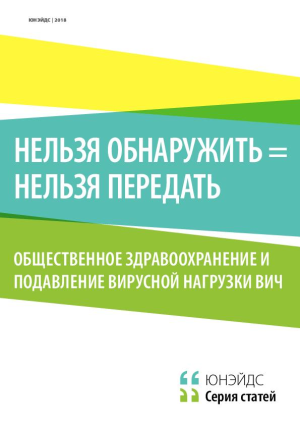
Нельзя обнаружить = Нельзя передать – Общественное здравоохранение и подавление вирусной нагрузки ВИЧ
За двадцать лет лечение ВИЧ доказало свою высокую эффективность в сокращении риска передачи ВИЧ. У людей, живущих с ВИЧ и проходящих антиретровирусную терапию, уровень вирусной нагрузки в крови снижен до неопределяемого, а значит, риск передачи ВИЧ половым путем практически равен нулю.
8th Symposium on HIV, Law and Human Rights
The report of the HIV Legal Network's 8th HIV, Law and Human Rights Symposium held in 2019 summarizes the discussions of the Forum where survivors of HIV criminalization shared their experiences and where experts in the field presented updates on the current state of HIV criminalization in Canada, the latest scientific developments surrounding HIV transmission and the future of advocacy efforts in the country.
Исследование PARTNER: НОЛЬ случаев передачи ВИЧ на 58 000 половых актов без использования презерватива
результаты исследования PARTNER говорят о том, что эффективная АРВ-терапия значительно снижает риск передачи ВИЧ-инфекции. Это исследование может служить убедительным доказательством того, что при неопределяемой вирусной нагрузке передача ВИЧ половым путем не происходит
Effectiveness of condoms in preventing HIV transmission
Recent meta-analyses of condom effectiveness suggest that condoms are 60 to 70% effective when used for HIV prophylaxis. A re-examination of HIV seroconversion studies suggests that condoms are 90 to 95% effective when used consistently, i.e. consistent condom users are 10 to 20 times less likely to become infected when exposed to the virus than are inconsistent or non-users. Similar results are obtained utilizing model-based estimation techniques, which indicate that condoms decrease the per-contact probability of male-to-female transmission of HIV by about 95%.
Per-contact risk of human immunodeficiency virus transmission between male sexual partners
Reports on follow up from prospective cohort study of gay and bisexual men. Findings include estimates of risk from unprotected anal intercourse and oral sex.
Estimating per-act HIV transmission risk: a systematic review
Reports analysis of recent studies on per-act HIV transmission risk and modifying factors. Includes risk associated with blood transfusion, vertical exposure, sexual exposures, and parenteral exposures. Finds the risk of HIV acquisition varied widely, with risk from sexual transmission substantially reduced by combined use of condoms and antiretroviral treatment of HIV-infected partners.
Assessment of Legal, Regulatory & Policy Environment for HIV and AIDS in Malawi
Designed to help governments and civil society review laws and policies based on human rights, and increase capacity to achieve enabling legal environments. Includes recommendations on criminalisation at pages 120-122.