Breastfeeding and HIV: An example of what stigma, discrimination and lack of information can cause.
This video reflects the story of a woman from Argentina who was prosecuted for wanting to breastfeed her baby and in the success of the defense of her rights with the accompaniment of ICW Argentina so that she could comply with the reproductive right of breastfeeding.
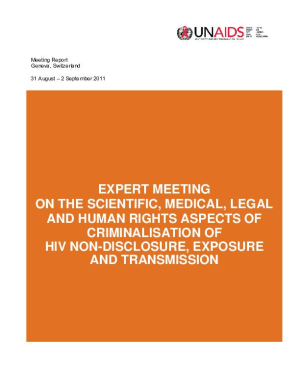
Expert meeting on the scientific, medical, legal and human rights aspects of criminalisation of HIV non-disclosure, exposure and transmission
This report contains the views, opinions and suggestions for policy orientation and formulation of the participants at an expert meeting (convened on 31 August–2 September 2011 in Geneva, Switzerland) that brought together scientists, medical practitioners and legal experts in order (i) to consider the latest scientific and medical facts about HIV that should be taken into account in the context of criminalisation, and (ii) to explore how to best address issues of harm, risk, intent and proof—including alternative responses to criminalisation—in light of this science and medicine.
The problem of ‘significant risk’: Exploring the public health impact of criminalizing HIV non-disclosure
Emphasizes that the concept of significant risk undermines communication about transmission risk during HIV counselling and contributes to contradictory advice about disclosure obligations. Criminalization discourages openness about HIV non-disclosure in counselling relationships. The recontextualization of public health interpretations of significant risk in criminal proceedings can intensify criminalization.

