
Community Insights in Phylogenetic HIV Research: The CIPHR Project Protocol
Protocol for engaging community activists living in Nairobi, Kenya in a knowledge exchange process: Drawing upon a community-based participatory approach, the CIPHR project will (1) explore the possibilities and limitations of HIV molecular epidemiology for key population programmes, (2) pilot a community-based HIV molecular study, and (3) co-develop policy guidelines on conducting ethically safe HIV molecular epidemiology. Critical dialogue with activist communities will offer insight into the potential uses and abuses of using such information to sharpen HIV prevention programmes. The outcome of this process holds importance to the development of policy frameworks that will guide the next generation of the global response.
The role of HIV viral suppression in improving individual health and reducing transmission
This policy brief describes key HIV viral load thresholds and the available viral load testing approaches for monitoring how well antiretroviral therapy is working for people living with HIV.
Key messages include:
- HIV viral suppression is critical to improve health, prevent sexual transmission, and reduce perinatal transmission.
- There are three key categories for HIV viral load measurements: unsuppressed (>1000 copies/mL), suppressed (detected but ≤1000 copies/mL) and undetectable (viral load not detected by test used).
- People living with HIV who have an undetectable viral load using any WHO-prequalified combination of sample and testing platform, including dried blood spot samples, and continue taking medication as prescribed have zero risk of transmitting HIV to their sexual partner(s).
- People living with HIV who have a suppressed but detectable viral load and are taking medication as prescribed have almost zero or negligible risk of transmitting HIV to their sexual partner(s).
A systematic review of risk of HIV transmission through biting or spitting: implications for policy
A systematic literature search was conducted using Medline, Embase and Northern Lights databases and conference websites. Results showed that there was no risk of transmitting HIV through spitting, and the risk through biting was negligible. Post‐exposure prophylaxis was not indicated after a bite in all but exceptional circumstances. Policies to protect emergency workers should be developed with this evidence in mind.
- Alternative links
- Español (Traducción automática), Français (Traduction automatisée)
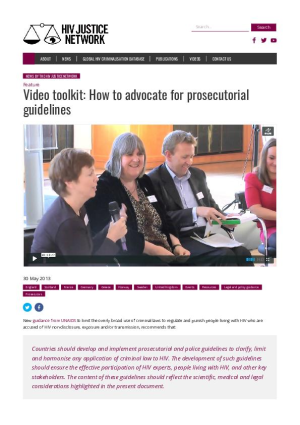
How to advocate for prosecutorial guidelines
This video toolkit comprises a workshop held during a seminar on HIV criminalisation in Berlin in September 2012 to discuss challenges associated with the creation of prosecution guidelines, providing important insights from prosecutors and civil society alike. The workshop followed the European premiere of the documentary ‘Doing HIV Justice: Clarifying criminal law and policy through prosecutorial guidance’ which explores how prosecution guidelines were created for England and Wales
Observación general núm. 22 (2016), relativa al derecho a la salud sexual y reproductiva (artículo 12 del Pacto Internacional de Derechos Económicos, Sociales y Culturales)
Incluye un comentario (en la página 40) que afirma que los Estados deben reformar las legislaciones que impiden el ejercicio del derecho a la salud sexual y reproductiva. Entre los ejemplos se incluyen aquellas leyes que criminalizan la no revelación del estado serológico, la exposición y la transmisión del VIH.


