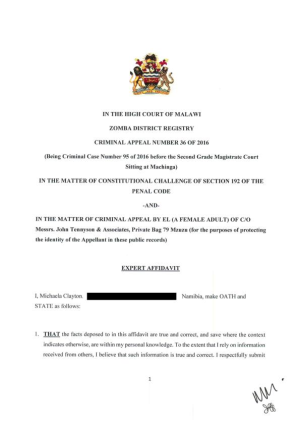
Expert affidavit in E.L. case on the impact of laws applied to criminalise HIV transmission or exposure
Affidavit provided to the High Court from Michaela Clayton, a human rights lawyer with extensive expertise in HIV/AIDS and human rights issues, concluding that, in her expert opinion, HIV criminalisation was unlikely to prevent new infections or reduce women's vulnerability to HIV but could in fact harm women rather than assist them, and also may negatively impact both public health and human rights.
- Alternative links
- Traduction française automatisée
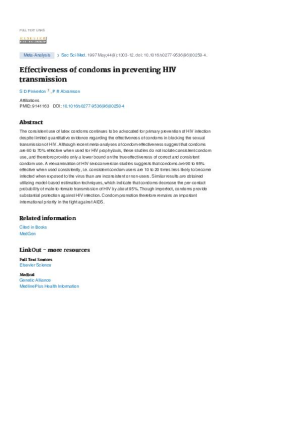
Effectiveness of condoms in preventing HIV transmission
Recent meta-analyses of condom effectiveness suggest that condoms are 60 to 70% effective when used for HIV prophylaxis. A re-examination of HIV seroconversion studies suggests that condoms are 90 to 95% effective when used consistently, i.e. consistent condom users are 10 to 20 times less likely to become infected when exposed to the virus than are inconsistent or non-users. Similar results are obtained utilizing model-based estimation techniques, which indicate that condoms decrease the per-contact probability of male-to-female transmission of HIV by about 95%.