
Enforcement of HIV Criminalization in Michigan
Using data obtained from the Criminal History Record database maintained by the Michigan State Police Criminal Justice Information Center, this study examines the enforcement of HIV nondisclosure laws from 1991 to 2024.
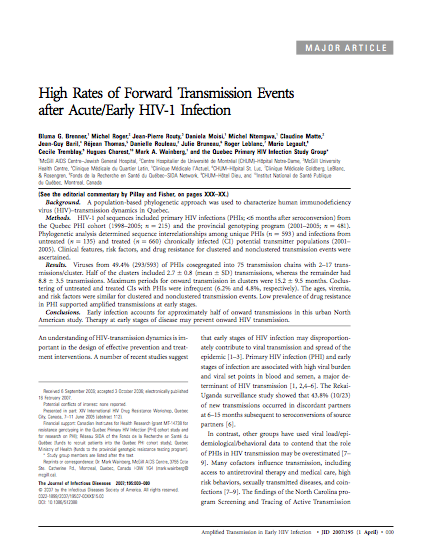
High rates of forward transmission events after acute/early HIV-1 infection
Uses a population-based phylogenetic approach to characterize HIV transmission dynamics in Quebec. Found early infection accounts for approximately half of onward transmissions. Suggests therapy at early stages of disease may prevent onward HIV transmission.
HIV Criminalization: A Physician’s Perspective
US physician, Dr Wendy Armstrong’s, first person account of the prosecution of one of her patients is a rare published work about HIV criminalization by a practicing HIV medical practitioner. The article walks the reader through Dr Armstrong’s experience as she is forced to testify against a patient in HIV criminalization proceedings.