Lessons learned from community engagement regarding phylodynamic research with molecular HIV surveillance data
The widespread implementation of molecular HIV surveillance (MHS) has resulted in an increased discussion about the ethical, human rights and public health implications of MHS. The researchers narrate the process of pausing their research in 2020 to conduct community engagement in response to these growing concerns and summarize the key lessons learned through conversations with community members.
Predictive analytics in HIV surveillance require new approaches to data ethics, rights, and regulation in public health
In this commentary, the authors describe ethical problems arising from big data interventions in HIV surveillance and suggest some potential pathways for reform.
Женское лидерство в вопросах декриминализации ВИЧ: опыт региона ВЕЦА
В сборнике собраны результаты исследований, проводимых женским сообществом, примеры задокументированных личных историй и судебных разбирательств. Все собранные материалы демонстрируют, насколько глобальной проблемой является криминализация ВИЧ и как она связана с гендерным насилием. Экспертки считают, что криминализирующие законы не защищают от заражения ВИЧ, а только ухудшают положение женщин в обществе.
Guía sobre VIH y derechos humanos para facilitadores legales
Con esta guía sobre VIH y derechos humanos se pretende brindar herramientas a aquellas personas que sin tener una formación académica en Derecho, se han dedicado a promover y proteger los derechos de las PVV, que son las poblaciones más afectadas por la epidemia. En el primer capítulo se abordan conceptos esenciales para comprender la dinámica de la epidemia en América Latina, tales como vulnerabilidad y riesgo, y se describen los factores de vulnerabilidad de ciertas poblaciones. El segundo capítulo hace énfasis en los derechos más comúnmente vulnerados, e ilustra cada derecho con un caso proveniente de una sentencia judicial o suministrado por las organiza. El tercer capítulo presenta los servicios legales comunitarios, su papel en la respuesta a la epidemia, el perfil del promotor o facilitador legal, y las técnicas de entrevista y comunicación necesarias para la asesoría legal. Por último, se incluye un capítulo sobre los mecanismos de protección de los derechos que pueden ser utilizados por los facilitadores, según el caso en coordinación con los abogados.
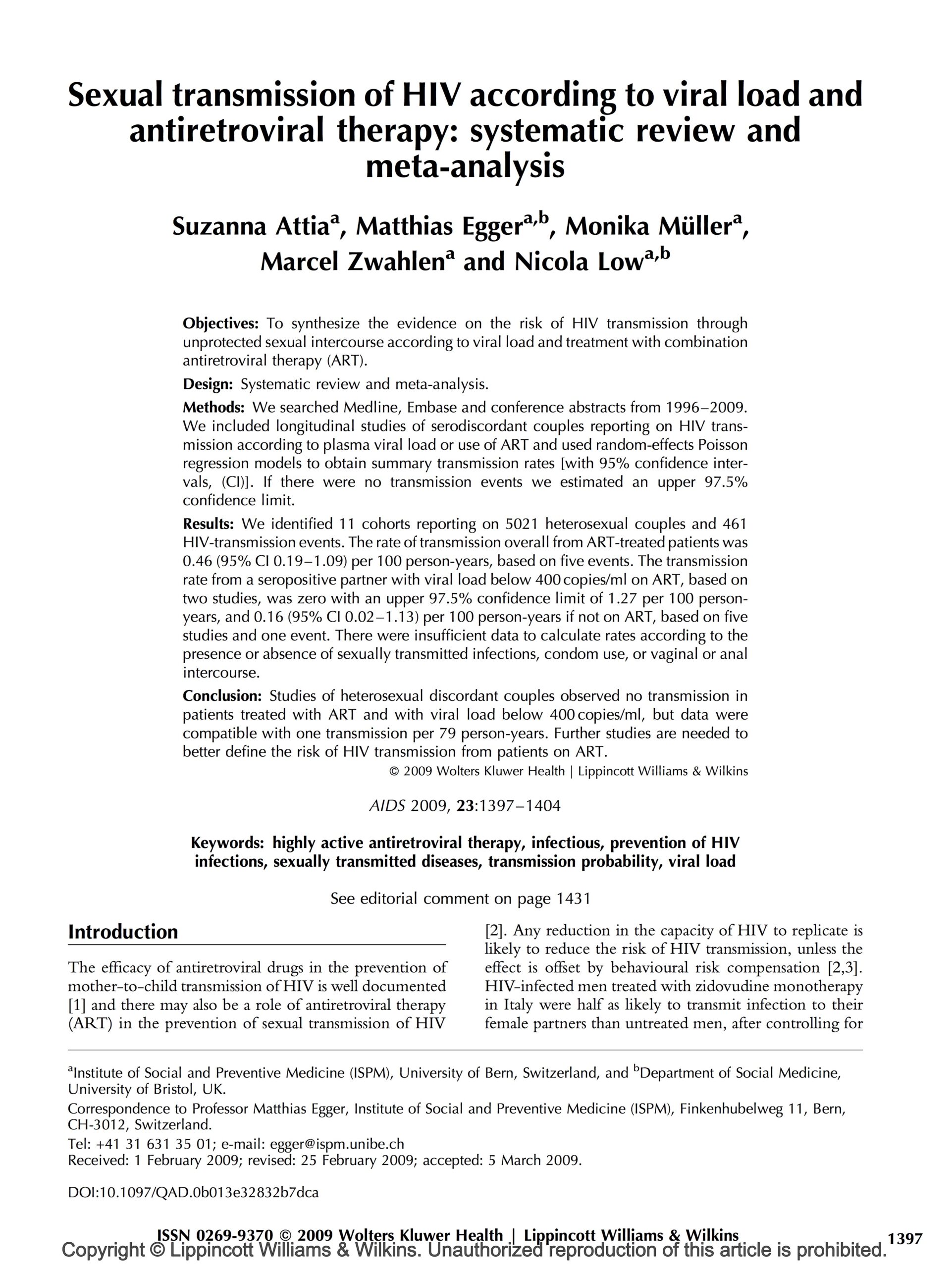
Sexual transmission of HIV according to viral load and antiretroviral therapy: systematic review and meta-analysis
Review and meta-analysis of 11 articles found no HIV transmission among heterosexual discordant couples when the positive patient was treated with ART and had a viral load below 400 copies (with data compatible with one transmission per 79 years).
Heterosexual risk of HIV-1 infection per sexual act: systematic review and meta-analysis of observational studies
Reports findings from systematic review and meta-analysis of observational studies of the risk of HIV-1 transmission per heterosexual contact (43 publications based on 25 studies).
A Roadmap for Change: Federal Policy Recommendations for Addressing the Criminalization of LGBT People and People Living with HIV
Makes recommendations to government agencies to improve the federal government’s strategy on HIV/AIDS. Also includes testimonials & policy recommendations to address cycles of criminalization of and discrimination against LGBT people. Includes specific section on criminalisation of HIV (pages 48 – 53).
Guiding Principles for Eliminating Disease-Specific Criminal Laws
This 2015 document from Positive Justice Project Steering Committee outlines their guiding principles for modernising or repealing HIV-specific criminal laws.
BHIVA Position Statement on HIV, the law and the work of the clinical team
The purpose of this statement is to outline issues at the interface between HIV transmission and the law and provide guidance to healthcare professionals (HCPs) working in the field of HIV Medicine. The guidance is to support work in the UK, and it is important to note that the law in England and Wales differs from that in Scotland and Northern Ireland. Approaches are suggested to deal with these issues consistently, within legal and General Medical Council (GMC) regulatory frameworks and in the context of the public health agenda. The guidance specifically addresses sexual transmission.
- Alternative links
- Previous Statement - 2013