
The ABC’s of HIV law reform in Latin America and the Caribbean
We interviewed key players in the Latin American and the Caribbean region to understand what led to law reform in three countries between 2019 and 2023: Argentina (2022), Belize (2023) and Colombia (2019). While the process in each country was, and always is, a product of factors unique to the local context and cannot be replicated exactly, lessons can be drawn from these case studies that are likely to be relevant to other countries.
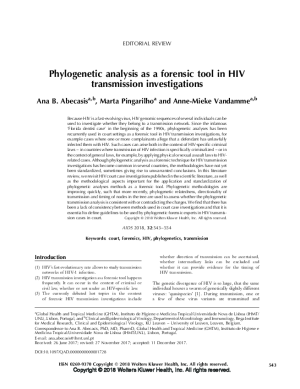
Phylogenetic analysis as a forensic tool in HIV transmission investigations
A review of HIV court case investigations published in the scientific literature, as well as the methodological aspects important for the application and standardisation of phylogenetic analyses methods as a forensic tool. Concludes that there has been a lack of consistency between methods and that it is essential to define guidelines to be used by phylogenetic forensic experts in HIV transmission cases.
Claims that phylogenetic analysis can prove direction of transmission are unfounded, say experts
Questions the merits of a phylogentics article published in Proceedings of the National Academy of Sciences, and warns against relying on its conclusions.
Criminalising contagion – Legislative epidemics: the role of model law in the transnational trend to criminalise HIV transmission
Explains how an epidemic of HIV criminalisation laws spread across the West and Central Africa regions enabled by model laws (the N'Djamena Model Law) drafted by USAID.