Intersecting issues, identities, and barriers in access to health care, HIV services & sexual and reproductive health and rights among key populations in Central and Eastern Europe & Central Asia
This briefing paper explores the impact of intersecting identities—such as LGBT, people who use drugs (PWUD), sex workers (SW), and people living with HIV (PLHIV)—on health access, agency, and social justice in the context of structural inequalities and stigma. Using the framework of intersectionality, it examines how overlapping identities shape lived experiences of discrimination, influencing mental and physical health outcomes and access to healthcare services. The paper is based on cross-regional consultations conducted across 14 countries in Central and Eastern Europe and Central Asia (CEECA), including surveys and focus group discussions with 103 individuals with multiple intersecting identities.

Points de vue des premières lignes : Allaitement et transmission du VIH
CATIE a rencontré trois personnes ayant une expertise dans ce domaine et leur a demandé de faire part de leurs points de vue et de leur expérience concernant le soutien dont les parents séropositifs ont besoin pour prendre des décisions concernant l’alimentation de leur bébé et les obstacles qu’ils rencontrent en matière d’allaitement.

Droits positifs: Les affaires DC et Mabior avec celles et ceux qui y étaient
Afin de souligner les 10 ans des arrêts DC et Mabior de la Cour suprême du Canada, Droits positifs revient sur ces deux affaires — surtout DC, un cas qui a pris naissance au Québec.
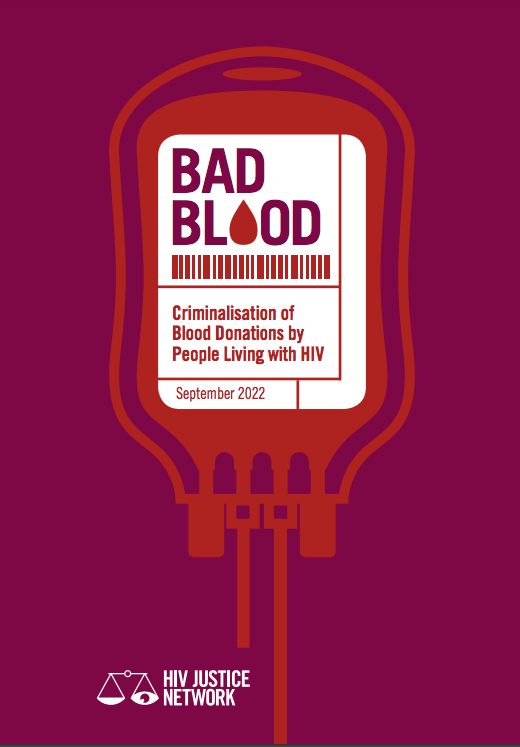
Bad Blood: Criminalisation des dons de sang par les personnes vivant avec le VIH
Suite à des rapports récents sur des poursuites liées au don de sang en Russie, à Singapour et aux Etats-Unis, le Réseau Justice VIH a entrepris une recherche documentaire, en rassemblant et en classant toutes les lois connues des pays et des juridictions qui criminalisent spécifiquement le don de sang par des personnes vivant avec le VIH, ainsi que les poursuites connues en vertu de ces lois. Nous avons analysé ces lois et ces cas en utilisant un cadre mondial d'orientation politique et de droit des droits de l'homme, éclairé par des données scientifiques internationales et étatiques évaluant les risques de transmission par transfusion sanguine.
Ce document a été traduit de sa langue d'origine à l'aide de DeepL Pro, une technologie de traduction en ligne basée sur l’intelligence artificielle
OptTEST Hoja de Tips 1 – Principios sencillos para una campaña eficaz sobre cambios legislativos o reglamentarios
Consejos sobre cómo diseñar e implementar una campaña mediática exitosa para generar cambios legislativos.
OptTest – Fiche de conseils 1 Des principes simples pour mener une campagne efficace sur les changements législatifs ou réglementaires
Conseils sur la manière de mener une campagne médiatique réussie pour susciter le changement.

Advancing HIV justice 4: Comprendre les convergences, Saisir les opportunités
Présente un rapport d’étape sur les succès et les difficultés du plaidoyer contre la pénalisation du VIH au niveau mondial entre le 1er janvier 2019 et le 31st décembre 2021.
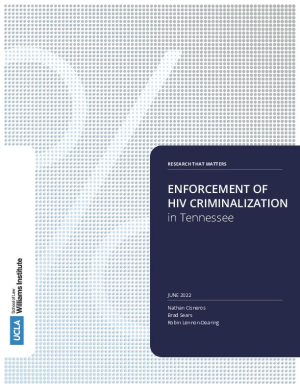
Enforcement of HIV Criminalization in Tennessee
Williams Institute analysis of data from the state of Tennessee about individuals who were convicted of an HIV crime and placed on the state’s sex offender registry (SOR). In addition to the registry data, the report also analyses detailed data from 77 case files of those on Tennessee’s SOR who resided and were prosecuted in Shelby County, home of Memphis.
МОЛЕКУЛЯРНЫЙ ЭПИДЕМИОЛОГИЧЕСКИЙ НАДЗОР ЗА ВИЧ- ИНФЕКЦИЕЙ: ГЛОБАЛЬНЫЙ ОБЗОР ВЛИЯНИЯ НА ПРАВА ЧЕЛОВЕКА
МОЛЕКУЛЯРНЫЙ ЭПИДЕМИОЛОГИЧЕСКИЙ НАДЗОР ЗА ВИЧ- ИНФЕКЦИЕЙ: ГЛОБАЛЬНЫЙ ОБЗОР ВЛИЯНИЯ НА ПРАВА ЧЕЛОВЕКА начинается с подробного объяснения сути методики MЭН ВИЧ и способов её использования по всему миру, включая то, как она работает, где применяется и кем. Затем в отчете описывается растущая озабоченность ситуацией с правами человека в связи с этой методикой. Далее в документе перечислены рекомендации по использованию MЭН ВИЧ, которые были собраны на основании обзора международной литературы и мнений членов Экспертно-консультативной группы.
Jugement Semba, Haute Cour du Zimbabwe (2015)
Le raisonnement du juge Charles Hungwe qui a accueilli l'appel au nom d'une femme de 26 ans, a été accusée du crime de transmission délibérée du virus de l'immunodéficience humaine ("VIH") tel que défini dans l'article 79 (1) (a) du Code pénal pour avoir brièvement allaité par erreur le bébé d'une autre femme.
Le jugement a conclu que les poursuites étaient "mal conçues car le législateur n'avait pas l'intention de criminaliser l'allaitement par des femmes infectées mais ignorantes. En tout état de cause, il n'y avait aucune preuve que l'appelante avait pleinement conscience que sa conduite entraînerait la transmission du VIH. En conséquence, elle avait droit à un acquittement lors de son procès".
- Alternative links
- English

No hay transmisión del VIH durante la lactancia por parte de madres con supresión viral en la zona rural de Tanzania (2018)
Breve informe de la práctica clínica en Tanzania en la que no se encontró ninguna transmisión del VIH por parte de las madres que continuaron recibiendo atención médica y mantuvieron la carga viral suprimida durante la lactancia. Se concluye que "la lactancia supone un riesgo muy bajo cuando las madres se adhieren a la terapia antirretroviral".
Disponible únicamente en inglés
¿I=I para las madres que amamantan y los bebés? La lactancia materna por parte de las madres que siguen un tratamiento eficaz para la infección por el VIH en entornos de ingresos altos (2018)
¿Puede aplicarse a la transmisión del VIH a través de la lactancia materna la campaña Indetectable = Intransmisible (I=I), establecida para la transmisión sexual del VIH? Un grupo de expertos mundiales propone una hoja de ruta para que la investigación en colaboración proporcione las pruebas que faltan para que las madres que desean dar el pecho puedan tomar una decisión con pleno conocimiento de causa.
Este documento fue traducido de su idioma original usando DeepL Pro (una aplicación web basada en inteligencia artificial) a fin de facilitar la lectura del contenido para los usuarios de la HIV Justice Academy. Reconocemos las limitaciones de las traducciones realizadas a través de este tipo de tecnología y no podemos garantizar la precisión de la versión traducida.

Réunion du Réseau parlementaire de lutte contre le VIH/sida, la tuberculose et le paludisme de l’Assemblée Parlementaire de la Francophonie
Présentation du PNUD pendant l'Assemblée Parlementaire de la Francophonie Lomé 03-04 Octobre 2018: Aperçu des lois sur la criminalisation en Afrique Francophone; Débat/Arguments pour et contre la pénalisation de la transmission et de la nondivulgation du VIH; La déclaration de consensus d’experts de 2018 sur le VIH et le Droit Pénal.
La pénalisation du VIH en Afrique francophone : état des lieux
Ce rapport présente les résultats d’une enquête sur la pénalisation du VIH dans les pays d’Afrique où le français est parlé (ci-après « Afrique francophone »), menée de mai à septembre 2017.
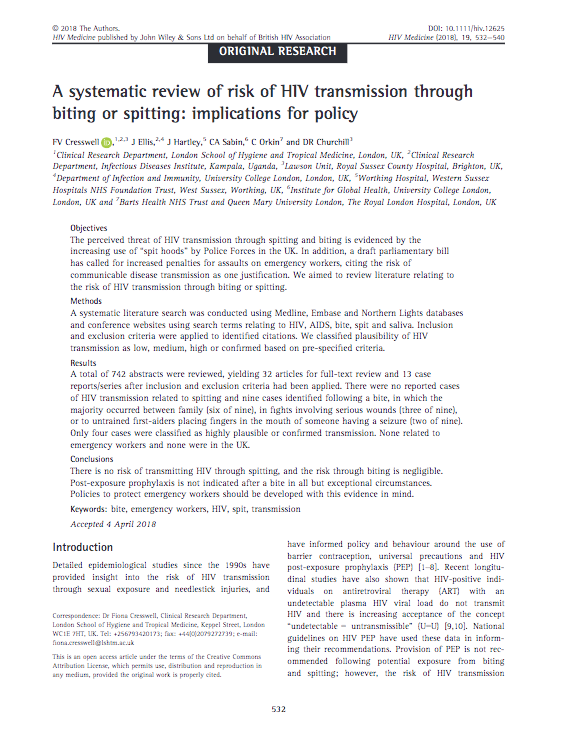
A systematic review of risk of HIV transmission through biting or spitting: implications for policy
A systematic literature search was conducted using Medline, Embase and Northern Lights databases and conference websites. Results showed that there was no risk of transmitting HIV through spitting, and the risk through biting was negligible. Post‐exposure prophylaxis was not indicated after a bite in all but exceptional circumstances. Policies to protect emergency workers should be developed with this evidence in mind.
- Alternative links
- Español (Traducción automática), Français (Traduction automatisée)
Políticas del cuerpo: La criminalización de la sexualidad y la reproducción – Manual de campaña
Se ofrecen técnicas concretas de campaña, como el mapeo de la participación y empoderamiento de las partes interesadas, la identificación de los destinatarios de las labores de incidencia y el desarrollo de la capacidades.
HACER QUE LOS MEDIOS DE COMUNICACIÓN TRABAJEN PARA LA JUSTICIA DEL VIH – Una introducción al trabajo con los medios de comunicación en el ámbito del activismo contra la criminalización del VIH
Esta herramienta ha sido elaborada desde el punto de vista –basado en la evidencia científica– de que la criminalización del VIH perjudica la salud pública, que no ayuda a reducir la transmisión de la infeccióny que no ofrece ningún beneficio a las comunidades. Esta herramienta tiene como objetivo ofrecer recursos para que tu grupo y tú podáis elaborar soluciones que se adapten a vuestro contexto.
De Charybde en Scylla : répression de la transmission du VIH en Suisse de 1988 à 2015
Analyse le cadre juridique existant en Suisse depuis 1988 et les principales étapes de la jurisprudence. Page 25
La criminalisation du VIH en France : ce que dit le droit, ce que fait la justice
Examine l'histoire de la criminalisation du VIH en France depuis 1991, et analyse certaines affaires importantes en termes de précédence - Page 9 du rapport.
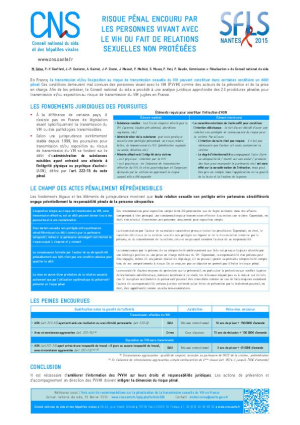
Risque pénal encouru par les personnes vivant avec le VIH du fait de relations sexuelles non protégées
Analyse juridique approfondie des 23 procédures pénales pour transmission et/ou exposition au risque de transmission du VIH jugées en France
El análisis filogenético como herramienta forense en las investigaciones sobre la transmisión del VIH
Una revisión de las investigaciones de casos judiciales de VIH publicadas en la literatura científica, así como de los aspectos metodológicos importantes para la aplicación y estandarización de los métodos de análisis filogenético como herramienta forense. Concluye que ha habido una falta de coherencia entre los métodos y que es esencial definir las directrices que deben utilizar los expertos forenses en filogenética en los casos de transmisión del VIH.
Este documento fue traducido de su idioma original usando DeepL Pro (una aplicación web basada en inteligencia artificial) a fin de facilitar la lectura del contenido para los usuarios de la HIV Justice Academy. Reconocemos las limitaciones de las traducciones realizadas a través de este tipo de tecnología y no podemos garantizar la precisión de la versión traducida.
- Alternative links
- English
Compendio de casos de defensa de la criminalización del VIH
Este compendio de casos de defensa de la criminalización del VIH tiene como objetivo apoyar a los abogados que actúan en favor de quienes se alega que han puesto a otros en riesgo de contraer el VIH. Basado en una investigación realizada a finales de 2017, incluye casos penales de todo el mundo en los que unos sólidos argumentos de defensa han dado lugar a una absolución o a una reducción de la pena para personas que viven con el VIH y que han sido acusadas de exposición, no revelación o transmisión del VIH.
El Compendio no pretende ser exhaustivo. Se ha elaborado como recurso para una formación de abogados de África: "Abogados por la justicia del VIH y la tuberculosis: Formación en litigios estratégicos, defensa legal y abogacía" - celebrada en Johannesburgo, Sudáfrica, del 20 al 23 de febrero de 2018.
Este documento fue traducido de su idioma original usando DeepL Pro (una aplicación web basada en inteligencia artificial) a fin de facilitar la lectura del contenido para los usuarios de la HIV Justice Academy. Reconocemos las limitaciones de las traducciones realizadas a través de este tipo de tecnología y no podemos garantizar la precisión de la versión traducida.
UNAIDS calls on Greece to protect sex workers and their clients through comprehensive and voluntary HIV programmes
UNAIDS expresses its concerns about the Greek Government’s treatment of alleged sex workers and also asylum seekers who may have an infectious disease.
- Alternative links
- French / Français, Russian / РУССКИЙ , Spanish / Español,
Advancing HIV Justice 2: Impulso a la defensa global contra la criminalización del VIH
Ofrece un informe de los logros y desafíos en la defensa global contra la criminalización del VIH desde abril de 2013 hasta el 30 de septiembre de 2015.
Este documento fue traducido de su idioma original usando DeepL Pro (una aplicación web basada en inteligencia artificial) a fin de facilitar la lectura del contenido para los usuarios de la HIV Justice Academy. Reconocemos las limitaciones de las traducciones realizadas a través de este tipo de tecnología y no podemos garantizar la precisión de la versión traducida.
- Alternative links
- English
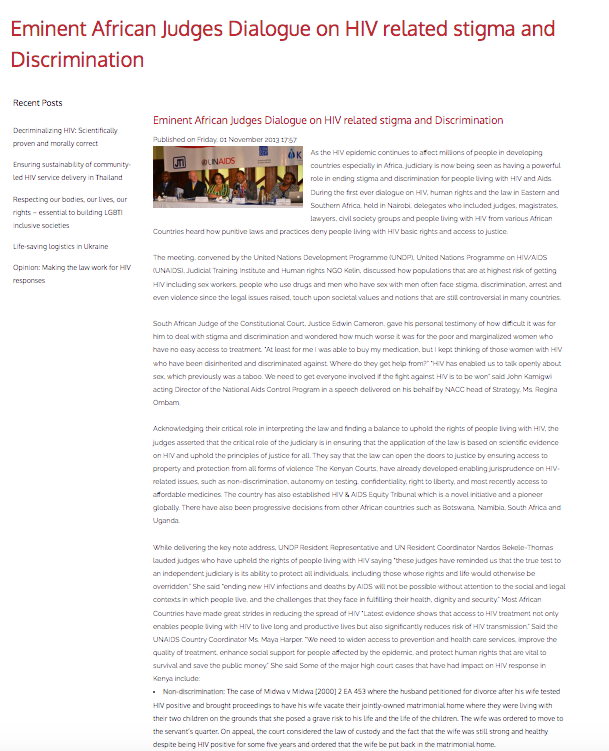
Eminent African Judges Dialogue on HIV related stigma and Discrimination
Describes the 2 day judicial dialogue of judges from Eastern and Southern Africa held in Naorobi, Kenya. Participants included judges, magistrates, lawyers, civil society organisations and people living with HIV.

Resolution of the Board of Directors of the National Association of Criminal Defense Lawyers Concerning HIV Criminalization
Opposes laws that base criminal liability and/or penalty on HIV status, rather than intent to harm. Argues that focus on knowledge of status as a key element of an HIV-related crime rather than intent and capacity to transmit the virus, is a classic example of an inadequate mens rea (or criminal intent) requirement and overly expansive criminalization.