
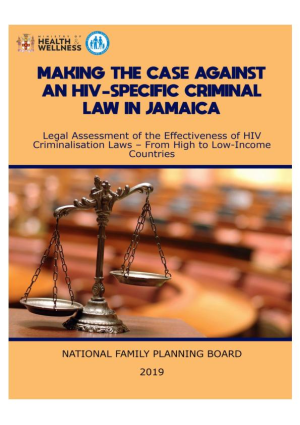
Making the case against an HIV-specific law in Jamaica
This assessment ‘Legal Assessment of the Effectiveness of HIV Criminalisation Laws-from High to Low-Income Countries’ demonstrates why the enactment of an HIV-specific criminal law in Jamaica would be harmful to the national HIV response. It sets out the bases on which the recommendation for an HIV-specific criminal law should be rejected and highlights the need for public health policy considerations to centre the discussions surrounding HIV criminalisation in Jamaica.
Factum of the Interveners at the Supreme Court of Canada: R v. Mabior and R v. D.C.
Questions whether the offence of aggravated sexual assault can and should be established for HIV non-disclosure in circumstances where, in the Interveners’ submission, there is no “significant risk” of transmission because of factors that dramatically reduce that risk, such as the use of condoms or an undetectable or low viral load
Advancing HIV Justice: A progress report of achievements and challenges in global advocacy against HIV criminalisation
Provides a progress report of achievements and challenges in global advocacy against HIV criminalisation during the 18 month period, September 2011 to March 2013.
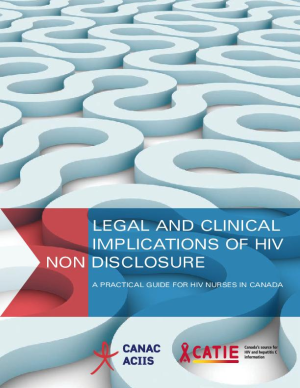
Legal and clinical implications of HIV non-disclosure: A practical guide for HIV nurses in Canada
Provides guidance on the complexities many nurses face working with people living with HIV including how to document advice on disclosure and responding to a search warrant.