
Report of the Special Select Committee on the Criminal Responsibility of HIV Infected Individuals (Resolution No.129/2010)
Report from GUYANA'S Special Select Committee of Parliament on the Criminal Responsibility of HIV Infected Individuals that chose not to make the transmission of HIV a criminal act, concluding that the transmission or exposure will be a major set-back in the country's existing national HIV response, and would undermine the excellent work that is currently being done locally to address HIV.

Challenging HIV Criminalisation in the East African Community: A brief for parliamentarians
This brief aims to be an accessible tool for parliamentarians in the East African Community (“EAC”) to understand HIV criminalisation. It aims to equip them with the tools to address misinformation and stigma about HIV with facts, science and human rights, and to develop strategies to rationalise, modernise and improve communities’ legal responses to HIV.

Анализ национального законодательства Грузии, связанного с СОГИ и ВИЧ
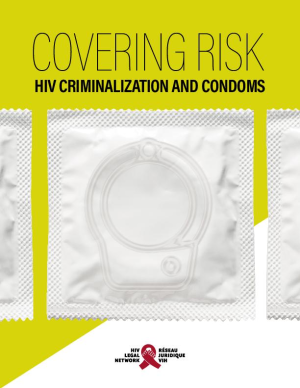
Covering Risk: HIV Criminalization and Condoms
While some policymakers and courts have recognized condom use as sufficient to negate possibility of HIV transmission, people living with HIV in Canada remain at risk of prosecution for alleged non-disclosure before sex with a condom. While the law may be unsettled, the science and policy reasons are clear: prosecuting people living with HIV who use condoms is unscientific and unfair. Law- and policymakers must act to definitively preclude prosecutions against people living with HIV who use condoms.
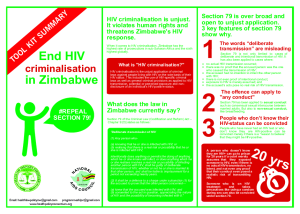
End HIV Criminalisation in Zimbabwe
Quick media toolkit summary on why HIV criminalisation law should be reformed in Zimbabwe.
Centering Health, Respecting Rights: A Training Manual for Police
This training manual draws on current scientific evidence and best practices related to police education and HIV and HCV health and safety training. It is intended for use by police departments to assist them in meeting their professional obligations to provide safer service to people living with and affected by HIV and/or HCV.
HIV Criminalization in Florida – Penal Implications for People Living with HIV/AIDS
Provides an overall understanding of the enforcement of HIV criminalization laws in Florida and assesses any preliminary findings indicating disparities between subpopulations. Preliminary analyses found that there is evidence of disparities in enforcement of HIV criminalization laws related to geography, race/ethnicity, sex at birth, or sex worker (or suspected sex worker) status and underlying related offenses.
Políticas del cuerpo: Manual general sobre la criminalización de la sexualidad y la reproducción
Se detallan las principales áreas que concitan preocupación, así como el daño que (de forma directa e indirecta) produce la criminalización del VIH sobre los derechos humanos de las personas y la salud de la sociedad en conjunto.
Position Statement on Harm Reduction
Acknowledges the harms caused by stigma and criminalisation. In particular, it acknowledges that the harms of criminalisation are borne disproportionally by Indigenous peoples in Canada. The Statement recognises that while people make their own health decisions, these decisions are only one factor influencing health outcomes.
- Alternative links
- French/Français
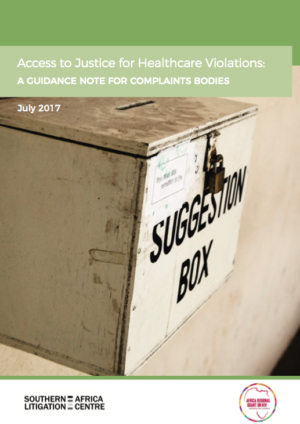
Access to Justice for Healthcare Violations: A Guidance Note for Complaints Bodies
This Guidance Note aims to provide concrete recommendations to alternative complaints mechanisms on how to provide safe, accessible and effective remedies for vulnerable and key populations who experience health rights violations.
Alternative complaints mechanisms are, for the present purposes, understood as those processes identified to be able to receive and determine complaints relating to health care outside of formal court procedures. These include healthcare regulatory bodies, such as health professions councils and nursing councils; decentralised complaints processes, such as complaints processes within ministries of health or health facility-based complaints mechanisms; and national human rights commissions and ombudspersons.
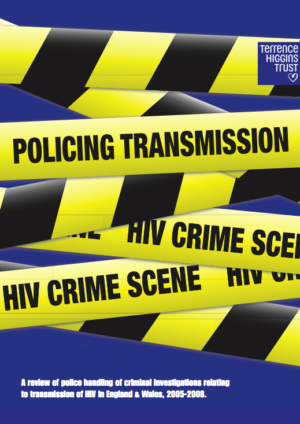
Policing Transmission
A review of police handling of criminal investigations relating to transmission of HIV in England and Wales, 2005-2008. The report was used as evidence to argue for both prosecutorial and police guidance. To get a sense of its findings and impact see also the aidsmap.com coverage of the launch of the report held in the UK House of Commons in January 2009.
- Alternative links
- Aidsmap.com report of launch
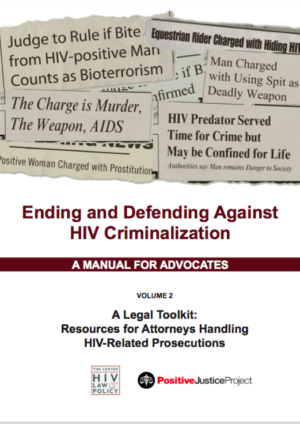
A Legal Toolkit: Resources for Attorneys Handling HIV-Related Prosecutions
This toolkit produced by the Center for HIV Law and Policy (CHLP) for the Positive Justice Project in 2013, provides multiple resources (including case law, legal analysis and scientific data) for lawyers representing people facing HIV criminalisation, and other advocates.
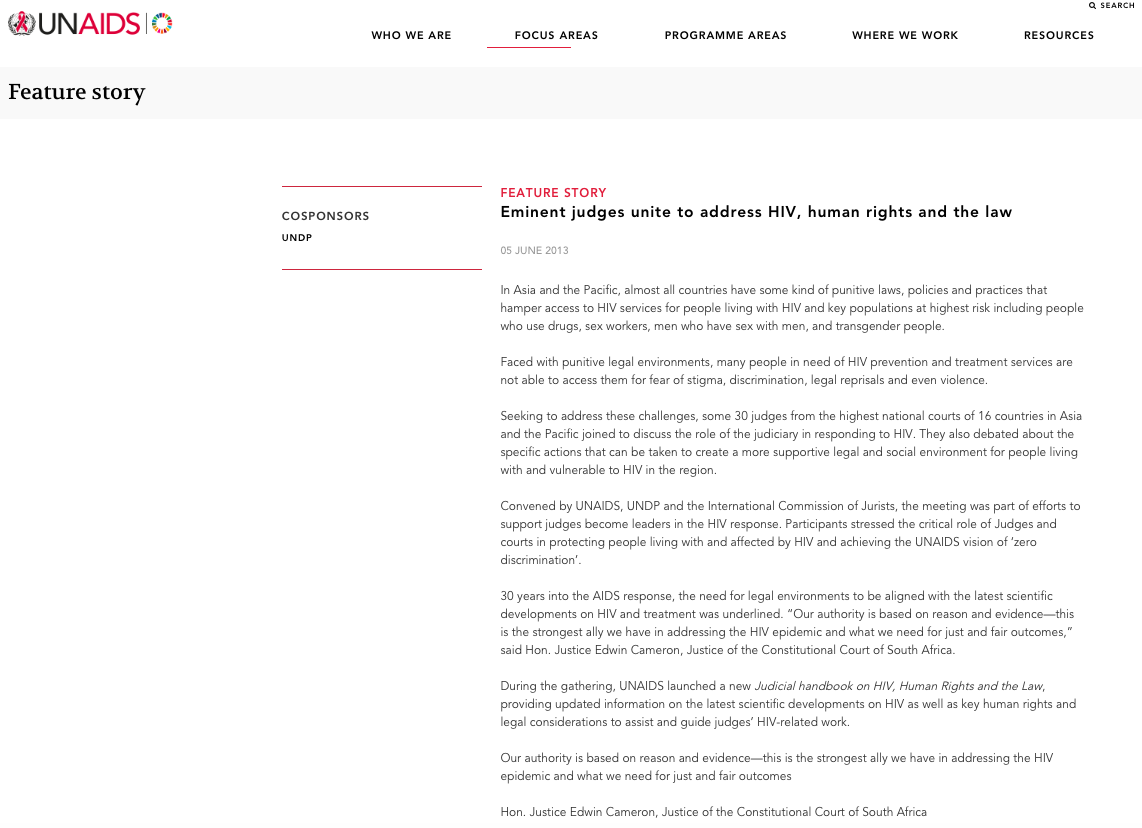
Eminent judges unite to address HIV, human rights and the law
Describes a meeting of some 30 judges from the highest national courts of 16 countries in Asia and the Pacific to discuss the role of the judiciary in responding to HIV. Judges also debated the specific actions that can be taken to create a more supportive legal and social environment for people living with and vulnerable to HIV in the region.
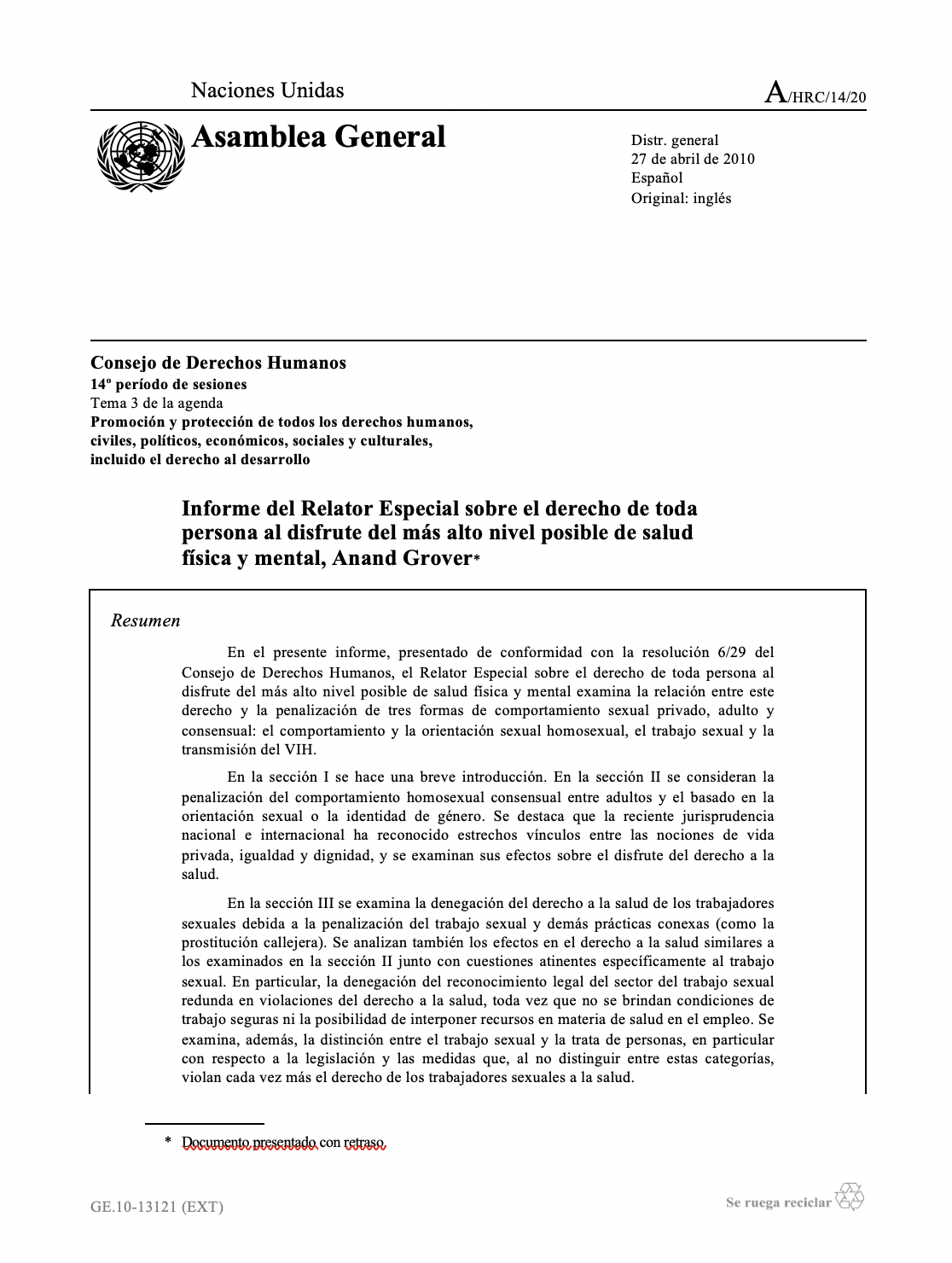
Informe del Relator Especial sobre el derecho de toda persona al disfrute del más alto nivel posible de salud física y mental
El informe (A/HRC/14/20) señala y describe claramente diversas formas en las que la criminalización socava la respuesta efectiva al VIH.

10 аргументов против уголовного преследования за заражение
В настоящем документе приводится десять причин, по которым криминализацию фактического или потенциального распространения ВИЧ-инфекции можно охарактеризовать как несправедливую и неэффективную публичную политику.