
Semba Judgement, High Court of Zimbabwe (2015)
Judge Charles Hungwe's reasoning that allowed the appeal on behalf of a 26 year old woman, was charged with the crime of deliberate transmission of human immunodeficiency virus (“HIV”) as defined in s 79 (1) (a) of the Criminal Law Code for briefly mistakenly breastfeeding another woman's baby.
The judgement found that the prosecution was "ill-conceived as the legislature did not intend that breast-feeding by infected but ignorant women be criminalised. In any event there was no proof that the appellant fully appreciated that her conduct would result in HIV transmission. In the result she was entitled to an acquittal at her trial."
- Alternative links
- Traduction française automatisée, Brief news story on post-appeal aquittal
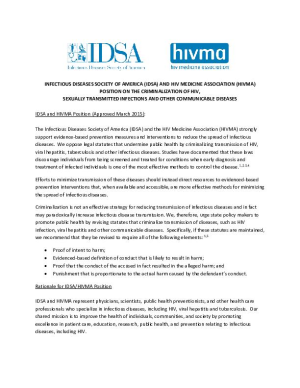
Position on the Criminalization of HIV, Sexually Transmitted Infections and Other Communicable Diseases
Highlights the detrimental effects of criminalization statutes and offers a statement of support for evidence-based prevention measures and interventions to reduce the spread of infectious diseases.
Criminal Law, Public Health and HIV Transmission: A Policy Options Paper
Proposes principles to guide thinking about law and policy on criminal law and HIV, considers alternative to criminalization, and makes recommendations about appropriate use of criminal sanctions and coercive public health measures.